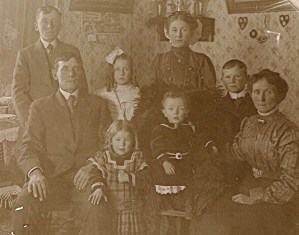
 Don’t ever tell Jacob Hardman that he couldn’t ride a horse. He was once bet $25.00 that he couldn’t ride a tortured big black mean one, but he did. He bred and broke horses, ran cattle, herded sheep, and hauled granite to the Salt Lake Temple. When he learned of free land and homesteads up in Canada, he transported family and belongings, and settled on 300 acres of hay and 80 acres of grain, raised potatoes, pigs and chickens, hunted goose and dear, and caught fish by drilling holes in the ice. While in Canada, gas lamps and coal stoves were replaced with natural gas. In the winter, they rode sleds, skated and danced. One Sunday father and son went to see if the grain was ready to cut. It was, so they pulled the binders out at one o’clock but at three-thirty, the hailstorm hit. It took all but about ¾ of an acre, so bare there wasn’t any straw left. After 3 years of hail, people begging them to stay, offering deals, but he hauled his family back to Utah for a job promised by his uncle, a contract with the Salt Works. On the way, Jacob and Charlotte in the Model T, the boys driving the teams, a train came through the tunnel, no whistle, shooting right between the two teams. The little black team which son Leonard was driving swung a bit and just sat there and held. The Lord was watching out for this family. On arrival in Utah, Jacob’s uncle died so the contract at the Salt Works fell through; no work. Jacob didn’t have much, but he had his family, his horses and his equipment, and took work hauling the gravel and cement for the Magna to Garfield road and worked ten acres of hay. Eleven months after their return, while making a hayrack, Jacob broke his ulcer. After an operation, gangrene set in. As the family rushed to the hospital to bit him farewell, the Model T frosted up Sid swung the car around and the family just missed a streetcar. Jacob’s last words to Charlotte, Sid, Ethel, Marie and Leonard were, “Take care of your mother and the kids.” (Ref. “Jacob and Charlotte Hannah Dearden Hardman by Sidney Lehi Hardman) https://familysearch.org/photos/documents/3489120 #AncestorClips

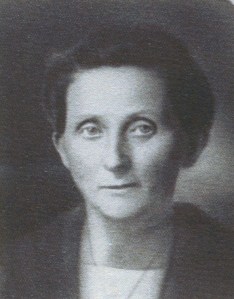 In 1924, eleven months after returning to Utah from difficult homesteading in Canada, my great-grandmother Charlotte Hannah Dearden Hardman was widowed with eight children when her hard working husband died of a broken ulcer. They had previously lost and buried two children in Utah, and two more in Canada. As he died, Jacob’s last words to his older children were, “take care of your mother and the kids.” Charlotte was a strong lady, a hard worker, and taught her children to be obedient. While her sons took care of many things, Charlotte and the girls took care of the home and the furnaces at the local Seminary. Charlotte outlived her husband by forty-one years, having supported her eight children in special events. She cared for her home and family until 1965. My heart is touched by her smile, her love, and her faithfulness to her family and the character she passed on to her children, and to her posterity.
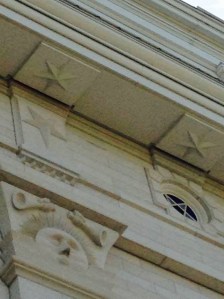 During the industrial revolution, John Hardman, my 3rd great uncle was a young working class mechanic in Manchester, England. Shortly after his father’s death, when apostles came, he recognized the truth, and joined the Latter-day Saints. But false notions and traditions caused him to stumble as a new member. He could have given up but his leader, William Clayton, counselled with him. He was called as a Deacon and Branch clerk. Accepting the prophet’s call, John and Mary set sights to Zion. On the ship Sheffield, mutiny threatened and John and others rallied to the captain’s aid, resolving the conflict, growing in character. They crossed the Atlantic, into the gulf, up the Mississippi, and on to Nauvoo. He worked hard, listened to prophets, was baptized in the river for his father, had a son, and built a home just blocks from the rising Nauvoo Temple. John and Mary were sealed in the House of the Lord; but, mobs raged and took his prophet; illness struck and took his mother and son; hatred swelled and drowned his brother on the Mississippi; suspicion grew and drove out the saints. With little means, John and family went south, to St. Louis. As a Missouri river merchant he equipped saints going west and assisted missionaries going east. A Patriarch promised great posterity, but it wasn’t to be; not in this life. John contracted cholera, and died in St. Louis, his blessings deferred. For now, he was God’s instrument in helping others to Zion.
 Seven years before I was born, in the fall of 1951, the war raged on in Korea. My dad wrote his Sunday letter to mom in California. During the pain of lengthy separation, they grew closer as their heart-felt letters crossed the Pacific. “I enjoyed church this morning,” dad wrote, “mostly I think because I attended the first… meeting since I have been over here. I can’t express in words how wonderful it made me feel. My heart is overflowing with wondrous and glorious thoughts.” As a son, what greater example could I have from my then 23-year-old father? It was during a time of unexpected trial and potential death, that my mom and dad looked to a hopeful future and made plans for a family. They have now passed. Their happy posterity grows as they planned. If they can endure, I can endure; if they can do hard things, I can do hard things. (by Kenneth R. Hardman)
  AncestorClips