
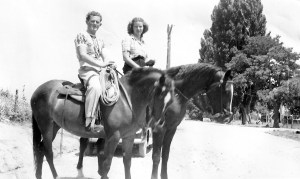
 Glenn Hardman and Dorothy Griffin; did they become good independent of outside factors? Certainly, not. Did any of this goodness come from their parents and ancestry? Certainly, yes. Dorothy spoke of her childhood. “I am truly grateful that my parents were always active and that they taught us by their example that church was the place we were to go, that activity in the church would bring joy and satisfaction to our lives. Though I have no memory of a burning testimony in those days, I know the seeds were planted then for my love of the church as I have grown older.” Similarly, Dorothy wrote of Glenn, “He went to Primary and learned about courage and being pure in heart, to be a cheerful helper to his father and mother every day, to say thank you, to obey, to be courteous at home, school and Primary, to pray and to appreciate the beautiful world.” As Glenn and Dorothy continued to grow in their youth, they made choices that brought them in contact with additional sources of help and divine instruction. While a young adult, Dorothy received an assignment she thought miraculous that gave her opportunity to serve in new ways, making her realize the source of her talents, and how she could use them for much good. “I began to see,” she wrote, “what the patriarch had meant when he told me I had talents that would manifest themselves in the positions of responsibility which I would have…” Glenn demonstrated his integrity when on his own in California, surrounded by a world of opportunities for good and bad. In a letter to his parents back home, some trusted friends wrote, “He never misses a day without coming in and reporting in. He is only going with church boys and girls and taking in the church activities. Dorothy Griffin, the girl he takes most, is a swell Mormon girl.” I can see how my life was and is influenced by their lives… I can see their influence in my life, in the lives of all their children, and their grandchildren and their great-grandchildren.
(Excerpts from Forward of, “Sidney Glenn Hardman and Dorothy Mae Griffin – Their story and their life,” Volume 1, 1928 – 1952, by Dorothy Hardman. Forward by Kenneth R. Hardman in 2015 compilation) #AncestorClips
 Opportunity was slim in Newton Utah in 1899. Walter and Eliza Caroline journeyed by steam locomotive from Newton to Indian Valley Idaho, anxious for promising, “cheap and plentiful” land further north. A “lawless element…infested the railroad,” so, “mother and the two baby boys rode in a passenger car” while Walter guarded the family’s possessions in a box car. Aroused from the continuous clickety-clack, he heard galloping horses and rough voices outside the train. An instant later, rough fingers wrapped around the end of the box car door. “Get out o’ here,” he yelled. The door opened a few inches with a slow screech. The Griffin “livestock” stirred, “penned-off at one end,” of the car. Their furniture and [belongings] were at the other end, and their heavy “machinery, wagon and food…were…near the doorway.” No stranger to guns and outdoors, he had learned hunting and defense from his frontiersman father. Walter grabbed his Colt .45 from beside his books and lantern. He stood, shoulders back, chin high, and aimed. A “tough” face looked in. Walter pulled back the hammer; the click filled the car. He “tighten[ed] his finger on the trigger.” The intruder “read the message in his eyes,” muttered, then backed out and “dropped off” the train. The family made it safely to Indian Valley, prospered “handsomely” for ten years then returned to Utah due to concern over “raising their family in this relatively untamed country.” Moving from “a prosperous…ranch” in Idaho to a “alkali-infested lake shore [in Utah] brought years of toil and struggle. However, [Walter] tackled it resolutely, often stating that, ‘hard work and perseverance could overcome any obstacle.’” #AncestorClips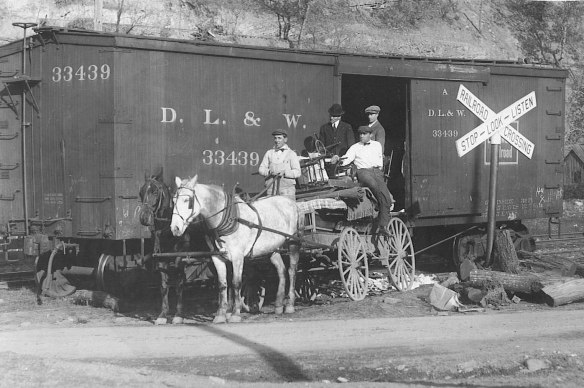
 “I was 22 years… old when my first babe was placed in my arms… We arrived at the hospital just before 6 PM… The night was long and the pains were hard. My husband… was kind and attentive. ‘When, oh when would my baby come?’ I was a little frightened. I…pulled [at my husband] when those pains struck me. I had been with my mother when her last two babies were born and… realized a very small percentage of what took place at childbirth. Finally, as the wee hours… crept in, I was taken to the delivery room; nurses and doctors all in white. I was so tired and the pains more severe… I was to breathe deeply the stuff they put into the mask… I remember the roaring noise as I swiftly went down a flume that was taking me on and on, so quickly and so far away. The next thing I knew, I was… in a nice clean bed, a nurse nearby, my husband sitting near me. It was almost 7:30 AM of May 17, 1924. ‘Is my baby all right?’ Junior was born at 6:00 AM, a beautiful baby, 6 pounds, 2 oz.… [The nurse] laid that little gift from heaven in my arms, and his tiny little fingers were touched by mine. Oh, what a beautiful baby, and he is all mine. I am a mother, and my husband is the father. [Soon] we went to town and bought a Pullman baby carriage, the nicest one in Ogden city. It was a beauty. I had the most beautiful baby boy, and I was indeed proud of him. I sewed his clothes; thanksgiving was in every stitch. I made him two-piece suits and always a cute bow tie and cap. As he got to walking age, his hair was blond and very curly. Everyone stopped to admire him. He was a good baby.”
 “Walter and Ben, were brought home shot in the legs,” the wagon jolt having discharged a gun. Ben lost his leg but Walter recovered. Their mother, Ruth Keep Griffin was acquainted with difficulty but met life with courage and a smile, likely influenced as a child by the faith of her family. “One night while grandmother Keep was in bed, her oldest daughter, Mary, came to her bedside and asked what she could get for supper as there was nothing in the house to eat. Grandmother answered, ‘Set the table, child, and the Lord will provide.” Just then there came a knock at the door. When Mary opened it, an old gentleman friend of Grandfather Keep’s came into the room. When he learned the condition of want they were in, he put his hand into his pocket and handed Aunt Mary money to get them all something to eat.” Ruth came from England to America at age 11. She worked, and developed skills. She met and married the faithful and hardworking John Griffin. Starting in a dirt floor log house they pieced together furniture as they build their family having eventually 13 children. She lost her hearing, but not her smile. She was the family gardener. “Flowers couldn’t help but grow for her with the care she gave them.” She sang, she danced, she joked, she knitted. They were a united family, in sorrow and joy. She was a radiant flower of Newton, Utah till she died at the age of 77.
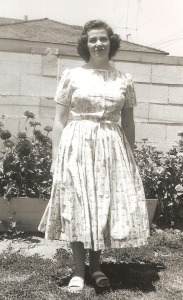 Some major customers didn’t pay; and Glenn’s cabinet business began to fail. Dorothy was very concerned about family bills and groceries. In the 1960’s they built their second dream home, welcomed their sixth child, and served anxiously in church assignments while building a growing company. Not able to focus on her church leadership position, she thought to ask for a release, and find a job. Glenn said, “No.” But her thoughts persisted. She had served well; surely God would not expect more. She couldn’t sleep, she prayed, she cried, and prayed more. She decided to ask for the release the next day. Thinking this choice would relieve her pain, she tried to sleep. “Not so! I turned and tossed and wept some more,” she said. In desperation she asked God, “Isn’t it the right decision?” Immediately, a flickering light in her mind became bright and she distinctly knew her decision was not the Lord’s will. “I did not understand why,” she said, “but I told him I would continue to serve as long as He had need of me…” She then felt peace. She new they would be blessed. Years later she looked back and realized that God new what was coming; what the family needed, and who needed her at that time. Dorothy’s specific fourth year of service was the exact time period needed for God to work miracles through her in the lives of at least two other people. Dorothy’s oldest daughter became deathly ill. The failure of the family business had resulted in a new job for Glenn, and relocation a year later that put the family in proximity to doctors who could diagnose and treat her rare disease.
 Shortly after his birth in 1898, WT Griffin, named after his father and the poet Tennyson, moved from Newton, Utah to Indian Valley, Idaho to homestead. Life was hard living off the land, raising grain and livestock. At age five or six, WT was driving a three-horse plow. Other children were born and the family prospered on their expanding ranch, sawmill, and blacksmith shop. It was hard work, but generally a happy time. At a very young age, WT learned lessons of faith from his parents. The Griffins were active in church and respected by the community. WT wrote, “Father was Presiding Elder… One day… one of the members told father that his family was in destitute circumstances, that he had earned a few dollars, which would be barely enough to buy groceries for his family. If he paid the money out for groceries he would have to wait to pay some tithing which he owed. What should he do? He felt his family should come first. Dad didn’t agree. He said, ‘You pay your tithing and we’ll see what we can do about the other.’ The thing which impressed me,” WT said, “was that the man paid his tithing and his family survived the winter very nicely… When I earned my first dollar, I… paid ten [pennies] tithing… Since that time I have been doing the same… I’ve never missed the money…”
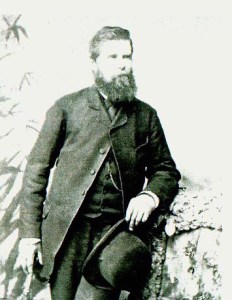 In 1876, on a trip to Florence Nebraska to bring goods back to Salt Lake City, my great-great-grandfather John Griffin and east-bound company attempted to get west-bound pioneers, goods, and oxen across the Green River in Wyoming. Due to storm and wind, the oxen resisted swimming across, moved around in a circle, generated a whirlpool, and caused three oxen to drown. Attempting to yoke the remaining oxen and ferry them across, John and other men retrieved chains from the west side of the river and hurried back to the ferry. John was prompted that he should not go on the ferry and held back. That ferry turned over and three passengers drowned. This was one of many trips east, to get supplies, serve a mission, and help immigrants coming west. I’m grateful for John’s never ending service and attention to divine feelings. He is a great example to his very large posterity.
 Seven years before I was born, in the fall of 1951, the war raged on in Korea. My dad wrote his Sunday letter to mom in California. During the pain of lengthy separation, they grew closer as their heart-felt letters crossed the Pacific. “I enjoyed church this morning,” dad wrote, “mostly I think because I attended the first… meeting since I have been over here. I can’t express in words how wonderful it made me feel. My heart is overflowing with wondrous and glorious thoughts.” As a son, what greater example could I have from my then 23-year-old father? It was during a time of unexpected trial and potential death, that my mom and dad looked to a hopeful future and made plans for a family. They have now passed. Their happy posterity grows as they planned. If they can endure, I can endure; if they can do hard things, I can do hard things. (by Kenneth R. Hardman)
  AncestorClips