
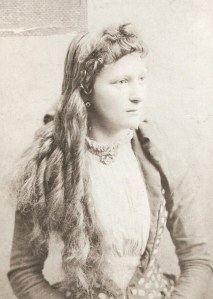
 At age 7, my great-grandmother Lillie and her dear 10 year old sister Clara were close, living a happy life together with their hardworking, loving parents and family. “Mother always took pride in our hair,” she wrote. They wore tight braids to bed on Saturday, and went to Sunday School in lovely curls. One day, Lillie learned that Clara would be the first of the family to go to America. Tears prompted her father to borrow money so the two would not be separated. In spring of 1883, they traveled with a missionary from her little village to Liverpool by train, by steamship to America, and by train to Salt Lake City, homesick for family, motherly care, bread and butter (scrape), bread pudding with sugar and raisins, cheese and watercress, and Sunday walks up the green. On arrival they found mosquitoes and a hot rail yard, not streets paved with gold, but they were cared for by their aunts including a hot bath and their hair combed out. Being daughters of shoe makers, they literally stood out, the boys pointing at the “stogies” (stout coarse shoes) on their feet. Lillie was often frightened at night. She learned to sew, attended summer school, and Sunday School. They missed their parents and siblings. A whole year after arrival, word came that father would come, but alone since a new baby required mother, brother and sisters to come later. She missed them all. “One day, Lillie was playing in the kitchen and a large rubber ball with colored pictures rolled across the floor. She looked up to see where it had come from and saw her dear father. She sprang into his arms and tears of gratitude rolled down her cheeks.” (By Kenneth Richard Hardman, adapted from William Wallace & Annie Lillie Clark Walker Book of Remembrance: Their Life, Their Family and Their Story, 1985, compiled by Dorothy Hardman with excerpts from Lillie’s autobiography. Photo from family archives)
 While John and Rachel Tirrell Ault were living in Deseret, Millard Co., Utah their son, little Georgie, wanted to go to Cedar Fort with his uncle, Reuben Coles. His mother said, “I need you, I can’t spare you. Ride a little way with Uncle Reuben and then walk back.” Georgie went with his Uncle over the river, then Georgie came running back to his mother very frightened. He told her he had seen a man all dressed in white, who had looked at him. Georgie said, “I was scared Ma.” His mother said she was so frightened when he told her this that she felt like her hair was standing on end. Later Georgie and his sister, Rachel, went out to the river to catch some fish for supper. While there, their father called Rachel. After telling Georgie to sit still, she ran to her father. When she came back there was no sign of little Georgie. Rachel ran on down the river and told her brother Jack, who was in swimming, what had happened. He jumped out and ran 2 miles bare naked to get a Hales boy who was an excellent swimmer and diver. The Hales boy went to the river and right to the spot where the body of little Georgie was held by willows. Mr. Hales came with his wagon and took the family and the body, to his home in Oasis, Millard Co., Utah and that is where George Ault was buried. The women stayed up all night to make the burial clothes while the men made the casket. The body was laid out on a sheet covered plank with Georgie’s faithful dog lying underneath keeping watch. (By Ina Calton Gilbert, Contributed by Susan Gilbert to
  On April 8, 1921, the day after her 18th birthday, Ardella Anderson retired to her room where she boarded and worked, near the Malad, Idaho train depot. The caretakers, the Pecks, had gone out for the evening, the children were bathed and put to bed. Thinking she might not hear them when her hosts returned late, she went to the kitchen and uncharacteristically unlocked the kitchen door then returned to her bedroom. The spring night air was pleasant so she opened her window half way. At a quarter to twelve she awoke suddenly. A man stood in the bedroom doorway. Ardella had many friends and together they had frequent fun in the late hours dating, dancing, buggy and car riding. But this man’s dark shape, silhouetted by the dining room light, was not familiar. He stepped forward, staring down at her. She shuttered, gazing up at him. She tried to scream. He hit her in the jaw with his fist. She called for Mr. Peck, knowing he wasn’t home. The intruder stopped, backed away, ran through the door, turned out the light, and left the house. Ardella was shaken, but got the courage to run to the kitchen and lock the door. She returned to her bed. The Pecks finally came home, and learning of the intrusion, called the Sherriff who made an unsuccessful search for the man. Ardella, the friendly and smart school valedictorian, was never alone at night again. (By Kenneth R. Hardman, based on, “The Diary of Ardella Elizabeth Anderson Losee,” written from 1919 to 1929, transcribed by Jana Greenhalgh) #AncestorClips
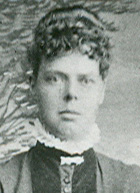 “Grandmother, Rachel Ault Elton, was born April 19, 1859, at Stony Stratford, Buckingham, England… She was the third child of a family of thirteen children. Through misfortune of one type or another, Grandma had only two sisters and one brother who lived to adulthood. When Grandma was only five years old, her folks decided to leave England and come to Zion. They sailed from Liverpool on September 3, 1873, on the Steamship Wyoming. Mr. John B. Fairbank was the captain of the ship. In addition to her parents, two brothers, and a baby sister, there were 410 saints on the ship. Even though Grandma was very young, she remembered and has often told of how they barely escaped shipwreck when the ship became lodged one night on a large sand bar near the Sabel Islands (300 km southeast of Halifax, Nova Scotia). On this occasion everyone was called from their beds to the deck and asked to kneel in prayer. After praying for safety, they all crowded to one end of the deck, and with human balance, they dislodged the ship from the sand-bar. I am sure that it was only the result of their praying and the will of our Father in Heaven that saved them.” (By Beverly Elton Hunt and others as compiled in Hardman Biographies – Ancestors of Sidney Glenn Hardman and Dorothy Mae Griffin, 2009. Photo from family archives)
 Shortly after his birth in 1898, WT Griffin, named after his father and the poet Tennyson, moved from Newton, Utah to Indian Valley, Idaho to homestead. Life was hard living off the land, raising grain and livestock. At age five or six, WT was driving a three-horse plow. Other children were born and the family prospered on their expanding ranch, sawmill, and blacksmith shop. It was hard work, but generally a happy time. At a very young age, WT learned lessons of faith from his parents. The Griffins were active in church and respected by the community. WT wrote, “Father was Presiding Elder… One day… one of the members told father that his family was in destitute circumstances, that he had earned a few dollars, which would be barely enough to buy groceries for his family. If he paid the money out for groceries he would have to wait to pay some tithing which he owed. What should he do? He felt his family should come first. Dad didn’t agree. He said, ‘You pay your tithing and we’ll see what we can do about the other.’ The thing which impressed me,” WT said, “was that the man paid his tithing and his family survived the winter very nicely… When I earned my first dollar, I… paid ten [pennies] tithing… Since that time I have been doing the same… I’ve never missed the money…”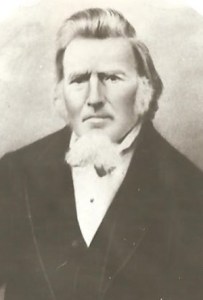
 In about 1841, with their new Mormon faith and seven children under the age of eleven, my 3rd great grandparents, Abraham and Elizabeth Coon experienced the heavy persecutions that drove the Latter-day Saints from Missouri. More children came in Nauvoo Illinois but one died in infancy. As persecution followed them to Nauvoo, Abraham and Elizabeth headed west with the Saints. With her support, Abraham served as bishop, never turning away the needy, experiencing “wagon accidents, diseases, Indians, tough river-crossings, loss of cattle and wagons, and many deaths.” He served as a captain of ten, and looked after several families whose husbands or fathers were called away in the Mormon Battalion. Although losing four of ten children in death, one as a baby, and three as older teenagers including one to cholera, they pressed forward to the Salt Lake Valley. Thank you Abraham and Elizabeth for your faith, honor, service and hard work.
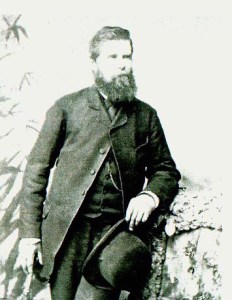 In 1876, on a trip to Florence Nebraska to bring goods back to Salt Lake City, my great-great-grandfather John Griffin and east-bound company attempted to get west-bound pioneers, goods, and oxen across the Green River in Wyoming. Due to storm and wind, the oxen resisted swimming across, moved around in a circle, generated a whirlpool, and caused three oxen to drown. Attempting to yoke the remaining oxen and ferry them across, John and other men retrieved chains from the west side of the river and hurried back to the ferry. John was prompted that he should not go on the ferry and held back. That ferry turned over and three passengers drowned. This was one of many trips east, to get supplies, serve a mission, and help immigrants coming west. I’m grateful for John’s never ending service and attention to divine feelings. He is a great example to his very large posterity.
 In the early 1920s, having served as a wireless telegraph operator and sergeant at the end of World War 1, high school valedictorian Andrew Fredrick Losee, set his course for college degrees that would some day land him as a teacher at a university. Part way to his goal, with a master’s degree in hand, he took a position as a high school teacher in Malad Idaho and acquired residence at the local boarding house where Ardella Anderson worked for room and board. Andrew and Ardella developed a friendship, fell in love and married in the Salt Lake Temple in September of 1924 then departed for Chicago to complete his doctorate studies in education, mathematics, physical science, history and psychology. While learning and serving in church callings, Ardella had an appendectomy, and was diagnosed with a leaky heart attributed to earlier rheumatic fever. Putting his goal on hold, Andrew moved Ardella back to the clean dry air of Idaho and Utah where he took teaching positions in Preston, Orderville, and a temporary assignment at Snow College in Ephraim, returning to Lehi each summer to help on the farm. They welcomed a son, Rex into their family in 1926, then a second son, Ferril in 1928. Ardella’s heart condition worsened so the small family made another move closer to better medical attention in Price, Utah, however in December of 1930, Ardella died in the hospital at the age of 27. Andrew found himself alone. A faithful teacher, Andrew taught for another year and a half in Price, then thinking of his boys, he moved back home to Lehi, terminating his goal, and his profession, to raise his boys on the family farm and to care for his aging parents. Ten years later, Andrew married a widow with five children, together caring for seven. In the words of his son, Ferril, “Andrew Losee’s life was filled with unselfish service. He was kind and loving. He was an intelligent man and well educated. He was respected and honored by all who knew him.” Andrew Losee inspires me to set good goals, pursue them with effort, but place family and service first above all else. Both of Andrew’s sons went on to teach at universities.
 In the 1940s, during the boom-town years in Los Angeles, Harvey Ralph Hansen became a highly successful grocery businessman, first with Safeway, then on his own, feeding the ever-growing population of World War II factory workers flooding in from the east. Harvey grew up on the farm in Richfield, Utah, married the sweet city girl Edna Violet Gulbrandsen, raised two children, and ran his businesses and investments. The stress however, took its toll. In his forties, Harvey had a heart attack and thought he would die. Treatment was successful but he needed to reduce his stress and work. They moved to Fallbrook, California, purchased an avocado ranch and worked the land, nourished the fruit and nurtured himself back to health. He had a great desire to learn and to serve. He read the entire Encyclopedia Britannica, built and ran a convalescent home, served as an ecclesiastical leader, listened and read continuously from apostles and prophets and was firm in his faith. Harvey Ralph Hansen was my grandfather. Since my own heart attack, knowing what he went through gives me hope that my future experiences and choices will be fruitful, as were his. (by Joan Hardman, photo from family archives) #AncestorClips
 During World War 1, and the Influenza Epidemic of 1918, sixteen-year-old Ella Mae Walker lay sick in bed for a week. “People died like ants,” she said. Everyone wore masks. “No one seemed to be exempt from the terrible disease.” No one visited. Lot’s of boys were dying abroad, animals were dying from the cold, and people were dying from the disease. Finding strength in prayer, Ella Mae recovered and with her hard working family remained grateful, and went about making soups, bread, and puddings. “Father and I would go in our wagon and take it to the homes.” Ella Mae was allowed to attend the funeral of a childhood friend. It wasn’t always that way; recalling her happy childhood, “The boys all played marbles, and we girls like to run and kick them out of their rings, and were often caught and had our braids pulled good and hard.” During setbacks, “The Lord has always helped me find many little things that just had to be found. I have knelt down by sage brushes or big tumbleweeds many times to ask him for help.” After the war and epidemic, those who remained, like Ella Mae went on, cheerfully, in honor of those who didn’t. Now, almost 100 years later, when I think of the bread pudding my grandma made for me as a child, I remember the goodness of her life, the “little things, the things that just have to be found,” and want to be like her. (by Ken Hardman, Ref. HARDMAN BIOGRAPHIES, Ancestors of Sidney Glenn Hardman and Dorothy Mae Griffin, Dec. 2009) #AncestorClips
 AncestorClips