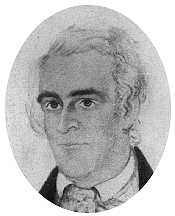
 Cornelius breathed deep and wiped his dusty brow, the rich soil bringing forth its Illinois potatoes and grain on this hot summer day in 1844. All was well; or at least it should have been. Cornelius felt a foreboding as he heard horses and looked up from his work. It was Joseph Smith, his brother Hyrum, and other familiar men approaching slowly. Cornelius ran the Smith farm and recalled many glorious conversations while working side by side with his friend, employer, and spiritual leader.
The horsemen stopped, but for a moment. Their solemn leader, as though knowing he would never see his farm again, looked out and said, “Who would want to leave a place like this?”a With love and encouragement, he looked down and said, “good-bye my friend.”
A month earlier in a similar scene, Cornelius mounted and accompanied Joseph to Carthage, but that trial was postponed.b This time, as the party continued along the dusty road, Cornelius may have remembered that dusty occasion in Nauvoo, picking up his supplies, then wrestling with the prophet in the clearing outside the Red Brick store. Many had gathered around and all challengers had been thrown by the prophet. In his mind Cornelius could still hear Joseph’s cheerful voice that day, “Here! I have thrown down pretty nearly everybody about the place except Brother Lott, and I believe I can throw him down, too!” More townsfolk had gathered from the store to watch the event. In the circle, Joseph and Cornelius, “ran together several times, but the best [Joseph] could do was to get [Cornelius] down to his knees.” Cornelius had exclaimed, “I told you, my boy, that you couldn’t throw old man Lott.”c
Back at the farm he looked again down Parley street, the dust nearly settled as the party had disappeared around the bend toward Carthage. Two days later the tragic news came; Joseph and Hyrum were dead.
In honor of what he knew to be true, Cornelius Peter Lott became a ‘captain of tens’ crossing the plains in charge of widow Mary Fielding Smith’s wagon. He was a high councilman at Winter Quarters, three times a church farm caretaker, a missionary, and faithful priesthood holder.d,e
(by Kenneth R. Hardman – To my father-in-law, Ferril Andrew Losee, great-great-grandson of Cornelius Peter Lott. Thank you Joan Losee Hardman for your help preparing this story) #AncestorClips, Also at: FamilySearch
References:
(a) Joseph Smith – History, Vol. 6. Chapter 29, p. 558.
(b) IBID, Vol. 6, Chapter 19, p. 412,
(c) Launius, Roger D., and McKiernan, F. Mark, Joseph Smith, Jr.’s Red Brick Store, 1993, p. 19-20. link
(d) Losee, Ferril A., Hardman, Jana K., Losee, Lyman A., The Losee Family History – Ancestors and Descendants of Lyman Peter Losee and Mary Ann Peterson, 2000, p. 20. link
(e) Ford, Gary S., Cornelius P. Lott and his Contribution to the Temporal Salvation of the Latter-day Saint Pioneers Through the Care of Livestock, a thesis, BYU, Dec. 2005. link
@CorneliusPLott
Inherited traits and patterns of goodness – (from Joan Losee Hardman) From Cornelius, we learn to faithfully go on in the face of pain or loss. I’m impressed with his hard work and admire his faith and support of his family. He never lost faith in the prophet of the restored Gospel.

 I have been reading biographies and autobiographies about my wife’s ancestors, Lars Charles Josephson and Anna Isaacson, and their 12 children. I am very inspired by them. At first, all I could see was how brave they were and how difficult life was for them (from my perspective); but the more I read, the more I realized how noble and good and great they are. My wife and children are part of this great heritage. Here is a tender composition by their oldest daughter, Anna Jane.
 On the farm young Ferril was taught by his father “to work hard and be a good person.” In addition to farming, football, dancing and music, Ferril was good “with [his] hands and could do construction and other tasks… The principal… once said, ‘I never had a son, but if I had I would like him to be just like you.’” Before graduating, with books in hand he hitchhiked each afternoon to learn about electricity and motors at a vocational school. With good grades in science, Ferril received a scholarship to BYU. He completing his undergraduate work at the University of Utah in his strongest subject, electrical engineering, where he “helped to run a student/faculty lounge, where we would electrocute hot dogs—the best hot dogs you ever tasted—with our electrical gismos.” In 1953 he earned his bachelor of science degree, complimented by the Outstanding Engineering Graduate award from the Institute of Radio Engineering, and received job offers from all seven of the companies with which he interviewed. Ferril chose Hughes Aircraft Company where he, “invented things and headed up the first satellite communications group,” completed his master of science degree at the University of Southern California, and for six years “did other things that were exciting.” At Aeroneutronics he “had an enviable record of getting new business, and that was very good for [him] financially.” After another 6 years, “I was shocked,” when “I received an offer to be the Chairman of the Electrical Engineering Department,” at BYU. He built what “eventually became one of the outstanding electrical engineering schools in the country.” Ferril taught for a couple decades and consulted for government agencies and industries. His specialties were radio, radar, and x-ray. In his retirement, he wrote two successful editions of an engineering textbook, in which he wrote, “there is both a desire and a need to learn about this important subject as completely and as easily as possible.”
 “Grandfather always had such lovely flowers. He took
 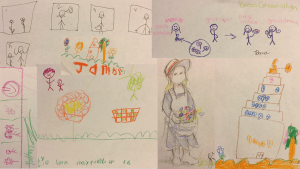 Then I went in. Grandfather met me first.
  (by Mary Elizabeth Losee Olsen, about her grandparents, Andrew and Anna Maria Peterson
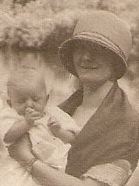 “I was 22 years… old when my first babe was placed in my arms… We arrived at the hospital just before 6 PM… The night was long and the pains were hard. My husband… was kind and attentive. ‘When, oh when would my baby come?’ I was a little frightened. I…pulled [at my husband] when those pains struck me. I had been with my mother when her last two babies were born and… realized a very small percentage of what took place at childbirth. Finally, as the wee hours… crept in, I was taken to the delivery room; nurses and doctors all in white. I was so tired and the pains more severe… I was to breathe deeply the stuff they put into the mask… I remember the roaring noise as I swiftly went down a flume that was taking me on and on, so quickly and so far away. The next thing I knew, I was… in a nice clean bed, a nurse nearby, my husband sitting near me. It was almost 7:30 AM of May 17, 1924. ‘Is my baby all right?’ Junior was born at 6:00 AM, a beautiful baby, 6 pounds, 2 oz.… [The nurse] laid that little gift from heaven in my arms, and his tiny little fingers were touched by mine. Oh, what a beautiful baby, and he is all mine. I am a mother, and my husband is the father. [Soon] we went to town and bought a Pullman baby carriage, the nicest one in Ogden city. It was a beauty. I had the most beautiful baby boy, and I was indeed proud of him. I sewed his clothes; thanksgiving was in every stitch. I made him two-piece suits and always a cute bow tie and cap. As he got to walking age, his hair was blond and very curly. Everyone stopped to admire him. He was a good baby.”
 “Walter and Ben, were brought home shot in the legs,” the wagon jolt having discharged a gun. Ben lost his leg but Walter recovered. Their mother, Ruth Keep Griffin was acquainted with difficulty but met life with courage and a smile, likely influenced as a child by the faith of her family. “One night while grandmother Keep was in bed, her oldest daughter, Mary, came to her bedside and asked what she could get for supper as there was nothing in the house to eat. Grandmother answered, ‘Set the table, child, and the Lord will provide.” Just then there came a knock at the door. When Mary opened it, an old gentleman friend of Grandfather Keep’s came into the room. When he learned the condition of want they were in, he put his hand into his pocket and handed Aunt Mary money to get them all something to eat.” Ruth came from England to America at age 11. She worked, and developed skills. She met and married the faithful and hardworking John Griffin. Starting in a dirt floor log house they pieced together furniture as they build their family having eventually 13 children. She lost her hearing, but not her smile. She was the family gardener. “Flowers couldn’t help but grow for her with the care she gave them.” She sang, she danced, she joked, she knitted. They were a united family, in sorrow and joy. She was a radiant flower of Newton, Utah till she died at the age of 77.
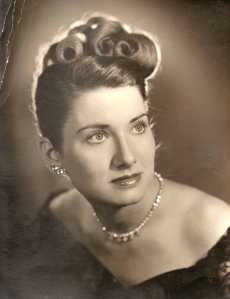 During the boom-town 1950s in Los Angeles, Dona Hansen, the queen of the church Gold and Green Ball, and daughter of a self educated businessman and a most charitable mother, culminated her youth in what she thought would be the crowning event, marriage to a promising man. A short time later while anticipating their first born, her husband left her. She was devastated. “I didn’t think anyone would want to marry a divorced woman with a little son,” she thought. Dona prayed as she always did, was blessed by the prayers of others, and remained “close to [her] Father in Heaven and Savior.” Some time later Dona received a proposal of marriage from a man not of her faith, and she went away to Salt Lake City to consider her future seeking direction in the Temple. She felt inspired to return to Los Angeles. Upon her return, she felt and knew that he was not the one. To her surprise, her fiancé informed her, “I have just met a fellow at church. In fact, he is just what you are looking for.” Driven by the Spirit of the Lord, she stood in church and bore her testimony. Her fiancé and friend Ferril Losee were in attendance. Ferril thought, “She is wonderful but… to good for me.” A short time later, noting the absence of the ring, Ferril asked Dona out on a date. They drove to the beach where, as the sun set upon a beautiful day, the sun rose on a glorious union. Ferril said that he “would be the happiest man on earth if [Dona] would consent to marry him.” Dona knew the Lord was in it, and agreed. (by Kenneth Hardman, adapted from, Losee, Ferril A.,
 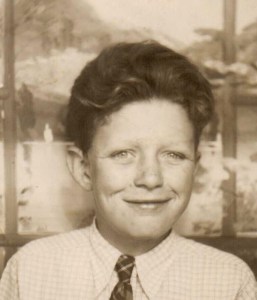 “One day when… 14 years old, I was on top of a load of hay. In crossing over a bridge some of the hay was grassy and moved on me. I put the reins to the horses over the ladder and went back with a pitch fork to straighten the hay. The horses lunged forward and pulled the reins off of the ladder. Then, they ran down a hill, pulling the wagon with them. I could not guide or stop them. They ran faster and faster… I jumped off the wagon which was moving at high speed just before we got to the highway. A big… freight truck… plowed into the side of the wagon. It killed one of the horses and seriously hurt the other…I avoided serious injury… [but] was very sad… I doctored the injured horse every day for about three months. It finally healed. I learned compassion and dependability in doctoring that horse.”
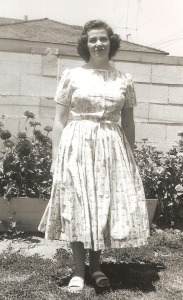 Some major customers didn’t pay; and Glenn’s cabinet business began to fail. Dorothy was very concerned about family bills and groceries. In the 1960’s they built their second dream home, welcomed their sixth child, and served anxiously in church assignments while building a growing company. Not able to focus on her church leadership position, she thought to ask for a release, and find a job. Glenn said, “No.” But her thoughts persisted. She had served well; surely God would not expect more. She couldn’t sleep, she prayed, she cried, and prayed more. She decided to ask for the release the next day. Thinking this choice would relieve her pain, she tried to sleep. “Not so! I turned and tossed and wept some more,” she said. In desperation she asked God, “Isn’t it the right decision?” Immediately, a flickering light in her mind became bright and she distinctly knew her decision was not the Lord’s will. “I did not understand why,” she said, “but I told him I would continue to serve as long as He had need of me…” She then felt peace. She new they would be blessed. Years later she looked back and realized that God new what was coming; what the family needed, and who needed her at that time. Dorothy’s specific fourth year of service was the exact time period needed for God to work miracles through her in the lives of at least two other people. Dorothy’s oldest daughter became deathly ill. The failure of the family business had resulted in a new job for Glenn, and relocation a year later that put the family in proximity to doctors who could diagnose and treat her rare disease.
 Phoebe wiped tears from her face as her creek-soaked children happily burst into their small summer home. “Why are you crying,” they asked. Phoebe quickly got them pulling molasses candy as she pushed back on her memories. She was happy with her husband, her children, and her faith, but change was hard. They had joined the Latter-day Saints in England. Back home, Elders had come regularly for cottage meetings, singing songs of Zion. George and Phoebe had a roast feast on the Sabbath, then they would walk up the rolling green pasture amongst the large oaks. As shoe makers he fixed soles and did tacking while she sewed them. He would then walk 10 miles, deliver their work, receive pay, and bring back work for next week. They ate bread and butter, simple black English tea and sometimes bread pudding with sugar and a raisin. Some family members had already immigrated and George had been anxious to take his wife and children. In 1883, they sent little Clara and Lillie to Salt Lake to live with family. A year later, George made the trip. He worked on a farm to earn travel for the rest. A year later, Phoebe set sail with the other 4 and eventually they enjoyed a happy reunion living in
  AncestorClips