





Each week on Maui, we look forward to Mondays when we conduct Addiction Recovery Program (ARP) support meetings. Each gathering is an hour of compassion and learning as we are blessed to feel a touch of the Saviors love for each person, and for ourselves. At the conclusion of each meeting, the service missionaries are invited to bear testimony of how the Atonement of Jesus Christ has blessed or healed them personally. On Tuesdays we typically write our weekly letter. This week’s letter is a bit personal but will give the reader some idea of the prayer, study and thought we go through to prepare for bearing personal testimony of Healing through the Savior.
On some days we refresh ourselves by taking a walk in the white sand like along Keawakapu Beach in south Kihei, or through the Iao Stream below the historic Iao Needle. God’s creations, his children and this earth, features and motion, are beautiful. Mid-week, as ARP Group Leaders, we start studying the next step in the twelve steps. We personally benefit from these studies as the principles of faith, repentance, accountability, healing and spiritual awakening are needed by all whether struggling with addiction, compulsive behavior, pains or shortcomings. (We are thinking more and more that ARP as a masterclass in personally applying the Atonement of Jesus Christ.)
Prayerfully anxious to apply principles to my own weaknesses or burdens, and while hiking from the base to the top of our neighborhood Wailuku Heights, a general conference message prompted the thought, “I need to start at the base, the foundational commandments, and work my way up. Then I’ll find the answers to my questions and comfort regarding burdens.” At the time of the prompting I may have been listening to, “The Great Commandment—Love the Lord,” by President Ezra Taft Benson (General Conference, April 1988). President Benson said, “Why did God put the first commandment first? Because He knows that if we truly loved Him we would want to keep all of His other commandments…” Later I searched for scriptures and for talks on the ‘great commandments,’ and chose two.
That day on our way to the Hoapili trailhead and ancient lava flow (see pictures), we listened to, “The Love of God,” by President Dieter F. Uchtdorf (General Conference, Oct. 2009), and “Bridging the Two Great Commandments,” by Elder Gary E. Stevenson (General Conference, April 2024). These were a great help. President Uchtdorf taught, “Because love is the great commandment, it ought to be at the center of all and everything we do in our own family, in our Church callings, and in our livelihood. Love is the healing balm that repairs rifts in personal and family relationships. It is the bond that unites families, communities, and nations. Love is the power that initiates friendship, tolerance, civility, and respect. It is the source that overcomes divisiveness and hate. Love is the fire that warms our lives with unparalleled joy and divine hope…”
I find ‘divine hope’ each time I show love for Him by reading his word. I was anxious as I recently approached my next chapter, Alma 32, to read again about planting and nourishing the seed of faith as described by Alma. As anticipated it was a wonderful refresh on faith and truth and knowing what is good. What I didn’t expect was how much meaning I would find in the very next chapter, Alma 33. (I think God knows what we need and when we are ready for it and then when we pray, He prompts our reading schedule accordingly.) A few days later I read Alma 33 again. Being focused on my concerns, I had prayed for Heavenly Fathers help that, like others in need of healing, I too would progress more intentionally in my faith in the Atonement of Jesus Christ and receive healing more fully and joy more regularly. I carefully read, and He answered. I slowed down and re-read each verse. The following phrases stood out as if to me personally.
“Thou wast merciful when I prayed…” (verse 4-10) “Thou didst hear me because of mine afflictions and my sincerity, and it is because of thy Son…for in thee is my joy…” (v. 11) I wondered if the Lord was disappointed with my lack of faith when I read Alma quoting Zenos, “For behold, he said: Thou art angry, O lord, with this people, because they will not understand thy mercies which thou hast bestowed upon them because of thy Son.” (v. 16) I thought, am I not believing enough? And then, “Behold, he was spoken of by Moses; yea, and behold a type was raised up in the wilderness, that whosoever would look upon it might live…” Some looked, others didn’t. “Now the reason they would not look is because they did not believe that it would heal them.” (v. 19-20) Do I really believe Christ can heal me?
As a good engineer, I diagramed in my journal what I was learning. And then I read the final verse, Alma 33:23, and discovered that the Lord provided a perfect summary already (brackets and emphasis added). “And now, my brethren, I desire that ye shall [plant this word in your hearts], and as it [beginneth to swell] even so [nourish it by your faith]. And behold, [it will become a tree,] [springing up in you] unto [everlasting life]. And [then may God grant] unto you that [your burdens may be light], [through the joy of his Son]. And even [all this can ye do if ye will]. Amen.” (Alma 33:23)
I need to love God and my fellow brothers and sisters with all my heart, believe in His mercies through His Son, feel the swelling joy, nourish it by faith even amidst challenges, let it and feel it grow into many branches toward everlasting life, and then let the joy of his Son lighten my burdens and brighten my hope. I do love Him. And yes, the Atonement of Jesus Christ has and will continue to bless our lives.
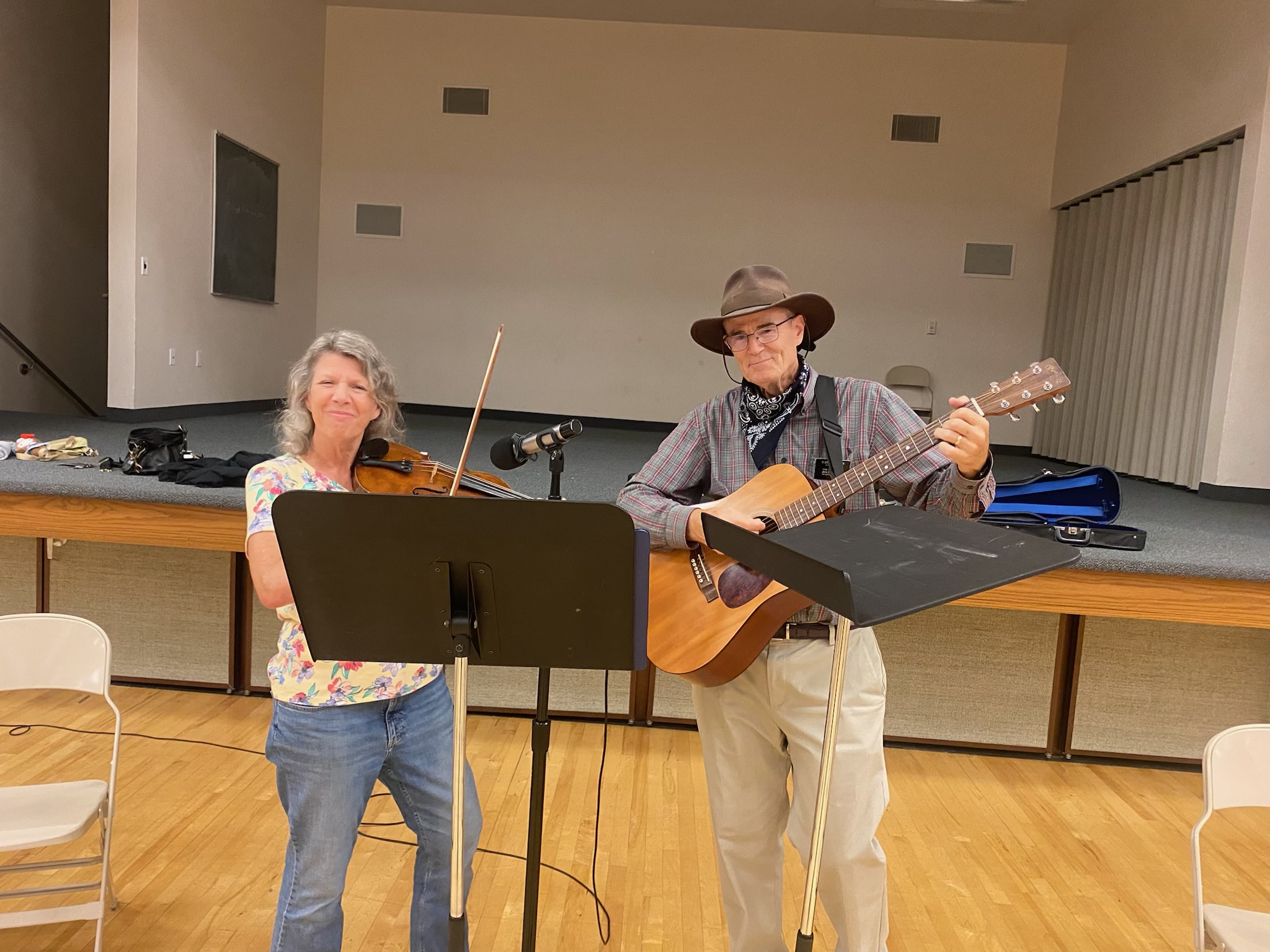
As a footnote, with our prior trek and pioneer music background, we conducted a Hoedown in our Kahului home ward (see pictures). It was fun singing, telling stories and calling dances like the heel-toe Polka and Virginia Real. After the hoedown we took a red-eye flight to Utah where over the next few days we visited and played with grandkids, celebrated our daughters birthday, and prepare for the sealing of our oldest grandson. (More on the wedding next week.)
 “Mother gave an Indian a whack with an iron poker for stealing her biscuits hot from the oven, and a papoose a whipping for shooting her ducks with a bow and arrow. The mother of the papoose went mumbling around their camp saying that Mother had wronged her papoose. So Mother went to Washakie, the Chief, and Washakie gave the squaw and papoose ‘heck’…
 In 1847, on the north shore of Zealand, as Danish citizens fought for “freedom of press, and religion,”1 fourteen-year old Hans Sorensen finished school and entered apprenticeship. That same year his mother and grandmother died. In 1849 the monarch gave in and the people won their desired freedoms.2 With a feeling of opportunity, Hans studied with a demanding shoemaker, and using local materials he became skilled at constructing shoes and saddles with maple pegs and strong flax thread.1 He was among the “industrious, peaceable, and skillful,”3 of his people. At age 20 his brother and father died4 but he continued his trade and service to his community. Nine years later, he married Maren Kristine Hansdatter also of his Parish and opened a shoe-shop in the nearby town of Tisvilde.1 The 1864 conflict with Prussia and Austria pulled him away from his work and bride as he was drafted in the 2nd battle of Schleswig-Holstein.1 He survived the painful war but Denmark lost significant portions of the country.2 Religious freedom was crossing the country as were the Mormon missionaries. As predicted by a Latter-day Saint leader, the war served to, “awaken the indifferent and the careless to a sense of their situation, and thus [brought] many into the Church…”3 Hans attended a Latter-day Saint meeting, “was impressed with their message… investigated…the doctrine, and was satisfied he had found the Pearl of Great Price.”1 #Ancestorclips
 In 1869, Andrew’s mother died before his 1st birthday. His father, Lars Anderson, with baby Andrew, made the trip from Sweden to Utah in just 30 days, on steamship and railroad. Andrew was left in the care of Lar’s sister, in St. Johns, Idaho, while Lars took work 150 miles south in the Utah Bingham mines. By 8 years of age Andrew was driving oxen and working the cornfields in Idaho. For the next 8 years, Andrew lived with or near his father in Utah who took him to his first store and bought him clothing and a suit. In Utah, Andrew earned meager wages herding sheep and cattle and working in the mines. He attended school for six months and learned to read the Bible. At age 17 he returned to Idaho continuing sheep herding. At age 23, his sick father asked him to come back to Utah. Shortly after Andrews arrival, Lars died of miner’s consumption, and Andrew paid for the burial. Andrew joined the LDS church at age 25 and had $800 from successful sheep herding. He was called to serve a mission, but declined indicating that “those better off should go,” wishing later, “that he had accepted the call.” Instead, he spent the $800 on more sheep, and he took a bank loan for horses and equipment. In a major spring snowstorm, after “the sheep were sheared and had lambs by their sides,” he lost them all in four feet of snow. He honorably reported to the bank, whereupon they took all his assets except for one saddle horse. Broke, and broken hearted, he returned to Idaho, obtained work shearing sheep, started over, and met the girl who would take him to the next level.
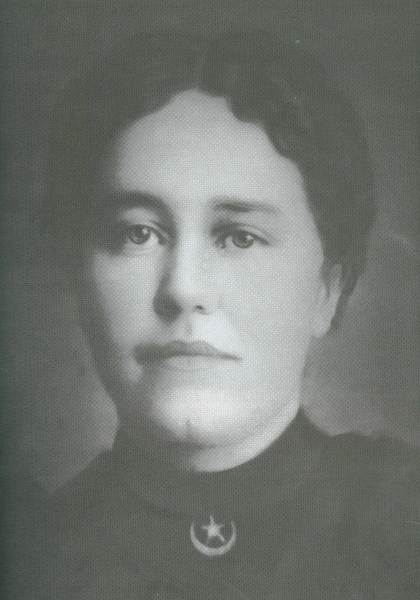 Hannah Elizabeth Josephson, came into the world (St. John, Idaho, to be exact) on November 27, 1877, 2 days before Thanksgiving. She was the 3rd of 12 children born to Lars and Anna Josephson, immigrants from Sweden. There was great love and respect in this large but united family. They were known as “one of the best behaved in the valley.” Hannah was a “pretty brunette,” industrious, and “of a cheerful and religious disposition.” “I used to pray every day and trusted in the Lord,” she said. “I had my prayers answered many times.” The children were taught reading, writing, arithmetic, and geography by their mother, so Hannah was well prepared to enter school at age 6, and continued through the 8th grade. In 1887, nearly all family members including her father had a brush with Typhoid Fever. Three months of dedicated nursing and service by the church and community pulled them through. There were no deaths in the family, but her brother Levi stuttered badly the rest of his life. Hannah was baptized in 1891. She was inspired by her parent’s faith and devotion. “Many times I saw [my father] ride on horseback a distance of 15 miles to attend priesthood meeting. My whole family was religious at heart.” Hannah served as 2nd Counselor in the Young Ladies Mutual Improvement Association at age 18, admired church leaders, and remained active all her days. She too, had many admirers. While courting the man of her choice, “Hannah gave [him] to understand that her husband had to be worthy to take her to the temple.”
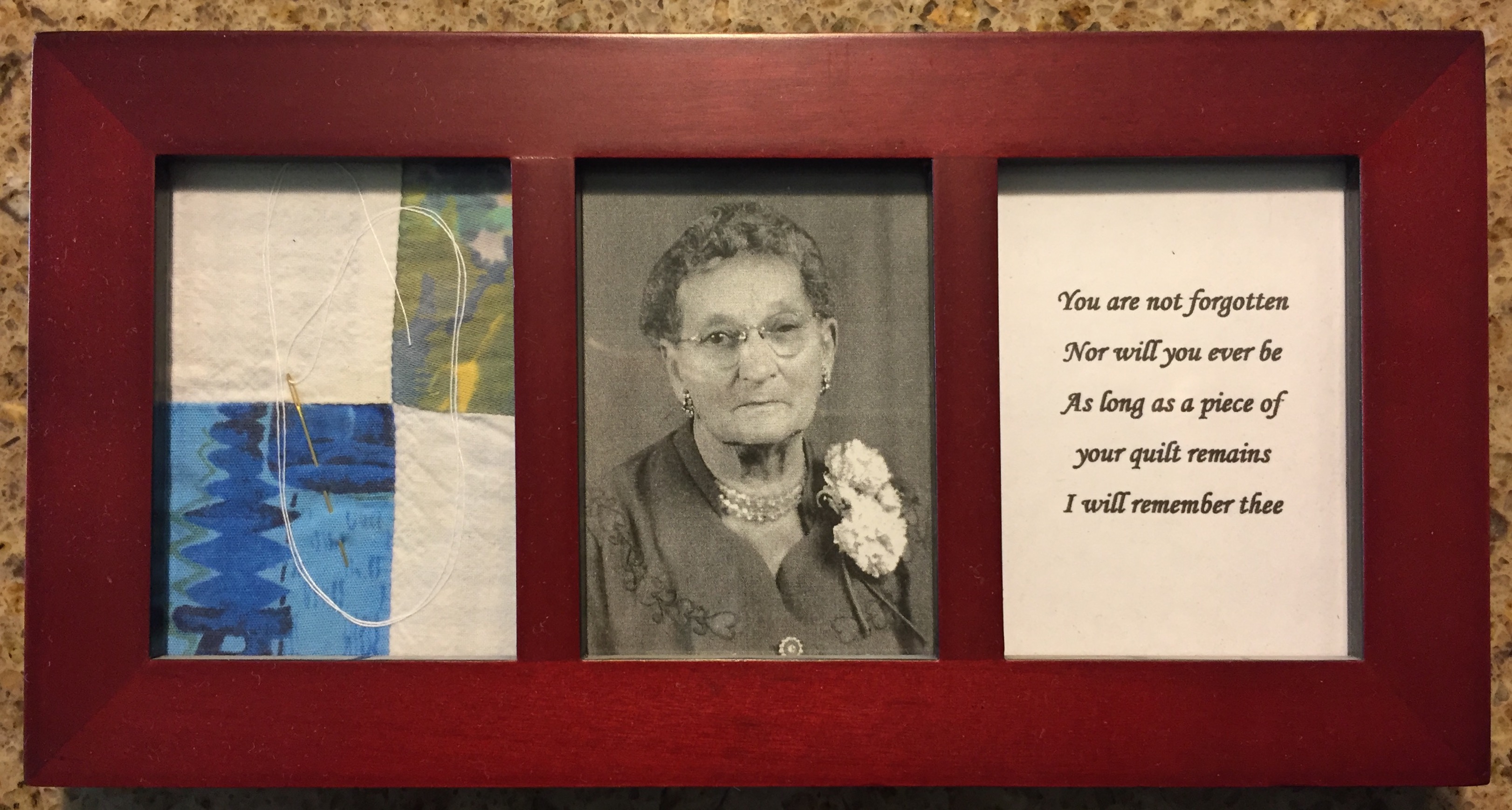 “Lillie’s life was not an easy one, but she knew how to find joy in work, in her family, friends, in service to others and many other little things. She loved the beauty around her and worked to keep her garden and flowers a delight to all who came to call. She created beauty with her hands, sewing many quilts as gifts and as a means of support for herself. One year, 1948 she quilted 26 quilts, made three more tops, braided and hooked 10 rungs and tatted four hankies. In July 1956 she got prizes on two of the three hooked rugs at the county fair. Her hands were never idle, and she gave of herself diligently to make life happier for those around her. [She] worked hard through her widowed years to sustain herself. She cared for mothers and their new babies, spending ten long nights and days for $25.00; the size of the family was no problem for her… While spending the last of her mortal life at Edna’s and Elmer’s just three nights before she died, as they knelt to have their family prayer, she said, ‘Let me pray tonight.’ And mind you she was very sick at this time. She said, ‘Dear Father, I am ready to die, and I want you to send my husband to get me…’ ”
 In about 1841, with their new Mormon faith and seven children under the age of eleven, my 3rd great grandparents, Abraham and Elizabeth Coon experienced the heavy persecutions that drove the Latter-day Saints from Missouri. More children came in Nauvoo Illinois but one died in infancy. As persecution followed them to Nauvoo, Abraham and Elizabeth headed west with the Saints. With her support, Abraham served as bishop, never turning away the needy, experiencing “wagon accidents, diseases, Indians, tough river-crossings, loss of cattle and wagons, and many deaths.” He served as a captain of ten, and looked after several families whose husbands or fathers were called away in the Mormon Battalion. Although losing four of ten children in death, one as a baby, and three as older teenagers including one to cholera, they pressed forward to the Salt Lake Valley. Thank you Abraham and Elizabeth for your faith, honor, service and hard work.
 AncestorClips