
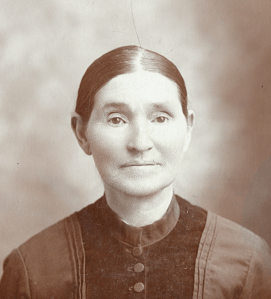
 In 1848, five-year-old Francis Ann Coon and her siblings tried to cross the Garner pasture, but the bull saw them and charged. They ran for safety. Her sister “Permilia…climbed [a] tree and…[her brother] John handed all the younger children up before he climbed up himself” narrowly escaping the animals wrath.1 The Coon family, in route from Nauvoo to Council Bluffs was selected to go with the first pioneers to the Salt Lake Valley, but then Brigham Young assigned father Abraham Coon to remain a few years in Pottawattamie “to run a mill and help provide for the Saints…”2 The “corn was scarce,” but the “bluffs, glens, and running streams” were “picturesque.”3 Francis observed her father, Bishop Coon,4 a former member of the Nauvoo Legion and guard to Joseph Smith, faithfully help operate the Indian Mill on Big Mosquito Creek and care for families whose men had gone to serve in the Mormon Battalion2 including William Garner, the likely owner of the bull.3 At this young age, Francis experienced the faith of her parents, their determination to be endowed in the temple before leaving Nauvoo,2 and their sealing in Winter Quarters.5 After fulfilling their assignment in Iowa, Francis and her family walked1 most of the way to Salt Lake to carry out their hopes and dreams in Zion. It was in Salt Lake where Francis would meet her future husband.
References
1. Hardman Biographies, Ancestors of Sidney Glenn Hardman and Dorothy Mae Griffin, 2009, pg. 53, Adapted from histories written by Lehi and Francis’ daughter Amelia Hardman Sadler, as included in Goble’s Coon book.
2. FamilySearch, “Rachel Caroline Coon,” Memories, https://www.familysearch.org/tree/person/KWNF-WQY, Biography by Handy, Annette Cooley, accessed 8/24/2017
3. Keatley, John H., History of Pottawattamie County, Iowa, Chicago, O.L. Baskin & Co, 1883, pg. 330
4. “Settlements – Pottawattamie County, Indian Mill,” BYU The College of Life Sciences, http://winterquarters.byu.edu, Winter Quarters, accessed 8/24/2017
5. Newman, Jessie Coon, FamilySearch.org
6. “Pottawattamie County, Iowa Genealogy,” https://www.familysearch.org/wiki, accessed 8/24/2017
#AncestorClips
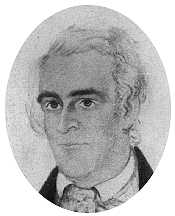 Cornelius breathed deep and wiped his dusty brow, the rich soil bringing forth its Illinois potatoes and grain on this hot summer day in 1844. All was well; or at least it should have been. Cornelius felt a foreboding as he heard horses and looked up from his work. It was Joseph Smith, his brother Hyrum, and other familiar men approaching slowly. Cornelius ran the Smith farm and recalled many glorious conversations while working side by side with his friend, employer, and spiritual leader.
 During the industrial revolution, John Hardman, my 3rd great uncle was a young working class mechanic in Manchester, England. Shortly after his father’s death, when apostles came, he recognized the truth, and joined the Latter-day Saints. But false notions and traditions caused him to stumble as a new member. He could have given up but his leader, William Clayton, counselled with him. He was called as a Deacon and Branch clerk. Accepting the prophet’s call, John and Mary set sights to Zion. On the ship Sheffield, mutiny threatened and John and others rallied to the captain’s aid, resolving the conflict, growing in character. They crossed the Atlantic, into the gulf, up the Mississippi, and on to Nauvoo. He worked hard, listened to prophets, was baptized in the river for his father, had a son, and built a home just blocks from the rising Nauvoo Temple. John and Mary were sealed in the House of the Lord; but, mobs raged and took his prophet; illness struck and took his mother and son; hatred swelled and drowned his brother on the Mississippi; suspicion grew and drove out the saints. With little means, John and family went south, to St. Louis. As a Missouri river merchant he equipped saints going west and assisted missionaries going east. A Patriarch promised great posterity, but it wasn’t to be; not in this life. John contracted cholera, and died in St. Louis, his blessings deferred. For now, he was God’s instrument in helping others to Zion.
 AncestorClips