
 “Hannah gave Andrew to understand that her husband had to be worthy to take her to the temple. So he set about preparing himself…” At last the happy day arrived. He borrowed a team and sleigh and they drove from St. John, Idaho to Logan, Utah. Living near their extended family, “they had good land, flowing wells, excellent horses and fat cattle.” On urgings from “a sharp real estate salesman,” the large group sold-out and went to Canada to start a ranch with their “100 head of cattle and 14 sheep camps.” It was the coldest winter on record and, “they lost most of the herd.” In the spring, with much sorrow and homesickness, Andrew and Hannah returned to Idaho to homestead 160 acres at “the head of the Big Malad River.” The high sagebrush indicated good soil but required “long, tiresome work” to clear the land. In the summer, they lived in a log cabin; in the winter they lived in St. John where their five children attended school. In later years, he broke his ankle and also had a stroke but remained cheerful. Hannah learned to drive when he no longer could. When grandchildren, Ferril and Rex, came to visit, Hannah drove them around town to show them off. Before his death, Andrew said, “It is my advice to all young people to read and learn all they can about this wonderful church we have and never turn down an opportunity to labor in this great work that we as Latter-day Saints have accepted.” Andrew died on his 80th birthday. Hannah said, “We had a happy married life. We never had a quarrel… I am thankful I had such a good man and such good children.”
(By Kenneth R. Hardman, based on Losee, Ferril A., South, Betty, The Anderson and Josephson Family History – Ancestors and Descendants of Lars Anderson and Anna Andersdotter, Lars Charles and Anna Isaacson Josephson, 1999, pages 57-65, photo from same reference) #AncestorClips
 Shortly after his birth in 1898, WT Griffin, named after his father and the poet Tennyson, moved from Newton, Utah to Indian Valley, Idaho to homestead. Life was hard living off the land, raising grain and livestock. At age five or six, WT was driving a three-horse plow. Other children were born and the family prospered on their expanding ranch, sawmill, and blacksmith shop. It was hard work, but generally a happy time. At a very young age, WT learned lessons of faith from his parents. The Griffins were active in church and respected by the community. WT wrote, “Father was Presiding Elder… One day… one of the members told father that his family was in destitute circumstances, that he had earned a few dollars, which would be barely enough to buy groceries for his family. If he paid the money out for groceries he would have to wait to pay some tithing which he owed. What should he do? He felt his family should come first. Dad didn’t agree. He said, ‘You pay your tithing and we’ll see what we can do about the other.’ The thing which impressed me,” WT said, “was that the man paid his tithing and his family survived the winter very nicely… When I earned my first dollar, I… paid ten [pennies] tithing… Since that time I have been doing the same… I’ve never missed the money…”
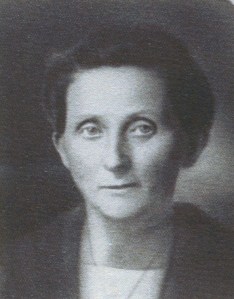 In 1924, eleven months after returning to Utah from difficult homesteading in Canada, my great-grandmother Charlotte Hannah Dearden Hardman was widowed with eight children when her hard working husband died of a broken ulcer. They had previously lost and buried two children in Utah, and two more in Canada. As he died, Jacob’s last words to his older children were, “take care of your mother and the kids.” Charlotte was a strong lady, a hard worker, and taught her children to be obedient. While her sons took care of many things, Charlotte and the girls took care of the home and the furnaces at the local Seminary. Charlotte outlived her husband by forty-one years, having supported her eight children in special events. She cared for her home and family until 1965. My heart is touched by her smile, her love, and her faithfulness to her family and the character she passed on to her children, and to her posterity.
 AncestorClips