




As service missionaries we have several callings or roles in our ward and stake. In addition to Group Leaders for the Addiction Recovery Program (ARP), we are also Sunday School teachers for the youth in our ward, and we are helping our ward plan for a special youth conference for next summer (more on that later). We are also working to provide additional self-reliance resources.
But we also have opportunity for service to our family and the world. Last Wednesday we volunteered for a four-hour shift at The Giving Machine, or Light the World Giving Machine placed by The Church of Jesus Christ of Latter-day Saints at Whalers Village mall in Lahaina. (See pictures) Donors could select from various products or services provided by local Maui charities. We overheard one family with three children step up to the machine as follows.
Dad said, “Okay, each of you can choose one item.”
The kids pressed their faces up to the glass and read their options including food, clothing, games for a needy family, or a live goat for a family needing to produce their own milk or help run a family business with milk products…
When the kids had made their selection, Mom and Dad each made their selection. I don’t know how much they donated in total, but surely each child knew the importance and value of giving. Great parents! It was an honor to participate with another ward member who wanted to serve but didn’t have a car to get there. We enjoyed the trip out to Lahaina and back with him.
On Thanksgiving Day Joan and I enjoyed a walk along a favorite beach (see picture). While returning midmorning to our apartment we noticed all the ridge windmills were turning rapidly (see picture) Since there’s no natural gas here for cooking, we presume this power was being used to cook a lot of turkeys J. Speaking of turkey we returned to our apartment for a simple but delicious Thanksgiving Dinner including pumpkin pie and just the two of us. We monitored posts from family members back home. We missed them; but It was nice. Black Friday was also peaceful and productive. Worked on some personal history research, calculated lumber needed for our Sons basement framing, then we sat on the beach reading together, “The Hawaiian Missions,” by George Q. Cannon. Very inspiring and nice sunset.
Actually we did indeed have a ‘full’ and wonder-‘ful’ Thanksgiving meal event with friends on Saturday. We gathered with four other service missionary couples. We are grateful to serve with them, learning and having a pleasant time in the process. (See picture) We were saying goodbye to one of the couples, Elder and Sister Rowe who were at the completion of their mission and returning to Orem Utah. The next morning we went to the Sacrament meeting where we heard them speak and tell about the deeply meaningful experiences they had nurturing Spanish speaking members of the community.
On Sunday afternoon we had the opportunity to speak to the Young Single Adult ward and share with them the blessing and power of Christ to help us overcome our weaknesses. We concluded our session reflecting on Fiery Flying Serpents, the Old Testament event where the Children of Israel were exposed to deadly serpents and many died. Moses prayed and was instructed to make a brazen serpent. All they had to do was look, and they would be healed but because of the simpleness of the way, many didn’t look and perished. Talking about our weaknesses, even if they are addictions, we need to stay focused on Christ, every day, to follow him, learn of him, grow in strength with him, and be healed by him. We were blessed with the Spirit in the meeting. While exhorting and trying to straiten his brothers, Nephi put it this way.
“And he loveth those who will have him to be their God. Behold, he loved our fathers, and he covenanted with them, yea, even Abraham, Isaac, and Jacob; and he remembered the covenants which he had made; wherefore, he did bring them out of the land of Egypt.
And he did straiten them in the wilderness with his rod; for they hardened their hearts, even as ye have; and the Lord straitened them because of their iniquity. He sent fiery flying serpents among them; and after they were bitten he prepared a way that they might be healed; and the labor which they had to perform was to look; and because of the simpleness of the way, or the easiness of it, there were many who perished.” (1 Nephi 17:40-41, Book of Mormon)
The week rounded out on Monday as we prepared for our weekly ARP meeting. Early in the day, to learn more about the man who is now our Prophet we watched a BYU Devotional from 1978, the year I was on my first mission. BYU President Dallin H. Oaks said that it is important what people think about us as members of the BYU community. The talk was called, “Where much is Given…” We recommend the talk and recommend listening to talks by President Oaks.
Finally, Monday night we were blessed again with love and compassion for our ARP guests, some who are progressing in their recovery and Healing through the Savior, and others who we are grateful that they are just coming and feeling and trying. The Gospel of Jesus Christ is love and power, and it blesses those who love and are loved. Sister Hardman provided raspberry cookies, each with a raspberry on top. She named them Haleakala’s, or little volcanoes.
 “Mother gave an Indian a whack with an iron poker for stealing her biscuits hot from the oven, and a papoose a whipping for shooting her ducks with a bow and arrow. The mother of the papoose went mumbling around their camp saying that Mother had wronged her papoose. So Mother went to Washakie, the Chief, and Washakie gave the squaw and papoose ‘heck’…

 As the smoke of the industrial revolution continuously settled on residents of Manchester England, in 1834, death persistently came to rest on the small home of Margaret and Richard Hardman. Likely with broken heart wondering if she would ever have children, she laid her fifth lifeless baby to rest in an early tiny grave. Margaret was a weaver, Richard was a rope-maker, but another 9 hopeful months passed with no daughters for mom to dress, and no sons to enter dad’s trade. With prayer, work, endurance, and love, another 10 years passed and 6 more pregnancies. Three would die, but three lived on; Alice Eliza, Lehi Nephi, and George Richard. Alice received the middle name of her grandmother, Elizabeth; George bore the middle name of his father, Richard; and Lehi Nephi carried the names given him by a prophet a year before he was born. Poor health restored under Priesthood hands by the Gospel of the Restoration, Margaret and Richard carried on, gathered with the Latter-day Saints, moved from their home with many of their family, ever onward, following the prophets from Manchester to Nauvoo. Living only blocks from the Nauvoo temple, they built Nauvoo, the Temple, and their posterity. After their eternal marriage and sealing in the Temple of God, Margaret lost Richard, missing on the Mississippi while working and escorting family members to Zion. Widowed, cast out through trails of sorrow, Illinois, Missouri, Iowa, Nebraska, and the loss of her second husband William Presley to cholera, she pressed onward, eventually to a place where her children including Jane Amanda Presley met their companions, raised righteous families, and gave Margaret posterity beyond all that she could have imagined. We too, can press onward, ever onward. #AncestorClips
 My great-grandfather William was 11 when his father died, and the English officers came to take him and his four brothers to the poorhouse. “How we clung to mother’s dress,” he said. Isabella was, a little woman. But in faith and work, [she was] a wonder. “Not one of these boys goes,” she said. “Each and everyone will go to Zion.” William had to quit school to sell papers, sweep crossings, and sell milk door-to-door. He worked in a small store, never touching money left laying around by the manager. “I wouldn’t take anything I did not honestly earn,” he said. No one doubted Williams honesty. Encouraged by his mother’s faith and letters. One by one all 7, plus mother made it to the valleys of the Salt Lake. In Utah and Colorado, at age 16 he maintained railroad ties for the Rio Grande, was promoted to surveyor, track foreman, bridge inspector, and conductor, sending every penny he could to his mother while contributing to the college education of his younger brother. On a work assignment he met Rachel Ault at the Cedar Valley station. They later married and ran a boarding house. Self educated, William spoke as though a scholar, brilliant in mathematics. Knowledgeable men often came to him to solve problems. He was happy, shook hands with everyone, did not find fault, and expected his children to respect others, especially their mother, and would not settle for any kind of sloppy job. He honored people, hung photos of servicemen on his wall, and wrote a poem for each funeral in the community. “And my dear loved ones, Lord I pray, protect, direct and guide each day. Dear Lord in truth may I increase, that when my mortal life shall cease, I may be worthy, Lord, with thee, to serve through all eternity.”
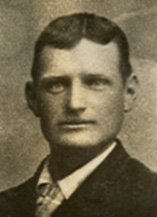 The two-year-old twins, Ellen and William, were excited when the baby came. Olive, was her name. But, 10 days’ later joy was robbed by tears as their mother passed away. William Walker was one of those twins. He was born in the spring of 1870 in Millcreek, Utah to James Craig and Elizabeth Griffiths Walker. Sorely missing their mother, this was a difficult time for the Walkers. The twins were taken in by their mother’s family. Eventually, Will went to live with his older sister, Mary Ann, and he worked in sheep camps as a tender or herder. Raising sheep was a year-round job, shearing in the spring, moving flocks to the mountains in the summer, then to market in the fall. He worked hard and earned a share in a sheep herd. While herding sheep, he no doubt heard of marvels near and far like the typewriter, the telephone, and the transcontinental railroad. It was in fact that railroad that brought the lovely Lillie Clark from far away England. They danced, they courted and they married. William sold his sheep herding share for a ‘wedding stake’ of $200. His first real home was a two-room log hut in the cottonwoods in Salt Lake, with bare floors, a wooden bed with a straw tick, two wool quilts made from his sheep and a companion he loved very much. (To be continued)
 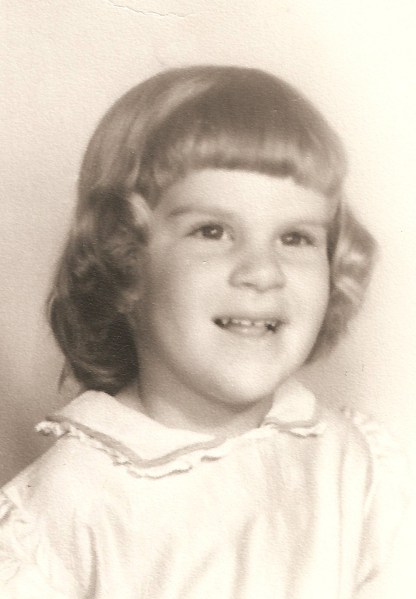 Cheryl Diane Hardman was born in January, 1951. As a brand new baby, she received a blessing by the hand of her father while he was on military training leave, then she didn’t see him again for 16 months while he served overseas for his country. She grew up a bright child. At the age of 3, Knowing that her baby brother loved bananas, Cheryl turned again to the hand of her carpenter dad and said in all seriousness, “Daddy, would you bring home some wood to make a banana tree?” As she grew, Cheryl did what most children did; she rode bikes, got cuts, had stitches, took music lessons, entered science projects and won awards. When older with 5 younger siblings, Cheryl politely told her parents that 6A students, especially the girls, “do not ride their bikes to school anymore. They are too old for that.” As a teen, Cheryl didn’t need to be reminded of homework. She enjoyed classes like typing, seminary, history, English, Spanish, science, and algebra. She even made some of her own clothes. Her favorite TV shows were, The Mouse-ka-teers, and Bonanza. With high hopes, her parents looked forward to great things in life for her. In 1969, fulfilling her college dream, Cheryl slowly developed debilitating symptoms from a disease whose diagnosis evaded doctors until Cheryl could not walk or talk; death was at the door. That year, as mankind overcame great odds and put a man on the moon, Cheryl desperately struggled and with the help of prayers, family, and many doctors, overcame the disease. She finished college, became a teacher, served others with handicaps, married, and raised a great family, thereby touching mankind for good. Thanks Cheryl, you are a great sister.
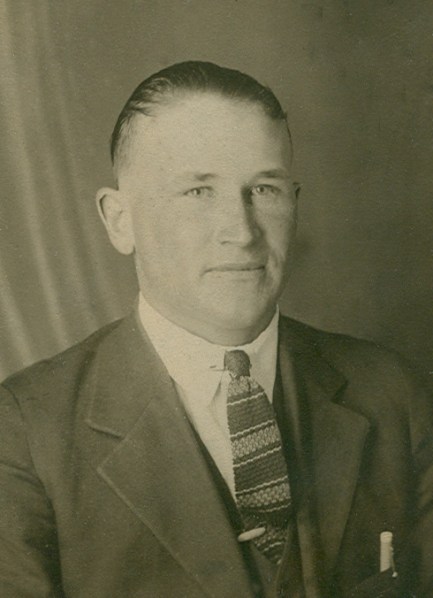 Typical for men in the depression years, Sid worked at whatever he could to keep bread on the table and a roof over the heads of his growing family. He was a “Jack of all trades,” adept at “making do,” mending with bailing wire, keeping things running. Myrtle and Sidney, served in the community and church and enjoyed the growing up years of their children being “mom and dad” to many, supporting them in their activities, inviting them to their home. This continued with grandchildren. They were protective of their children, who never heard “their dad tell a sexy or off-color joke.” He enjoyed a good clean time and liked to see others having a good time too. He pulled bobsled with his team of horses turning that sled round and round, flipping those kids out in the snow. Sid took his family role to heart; he taught, he loved, he scolded, he played, he supported. He and his sweetheart were always on hand for everything; baseball, wrestling, football, softball, proud of the accomplishments of family members. “Sid’s shop was a place of learning and the boys enjoyed working with him. Grandpa was always fussy about keeping his tools in the right place and taking care of things. So it was with his animals: he followed his dad’s training and always took care of the horses, unharnessed them, brushed them down and fed them before he had his own meal.” He was honorable and endured cheerfully throughout his life, a great example to his posterity. (Adapted by Kenneth R. Hardman from Sidney Lehi Hardman & Myrtle Emily Elton: Their Life, Their Love and Their Family, 1900-1991 compiled by Dorothy Hardman. Photo from family files)
 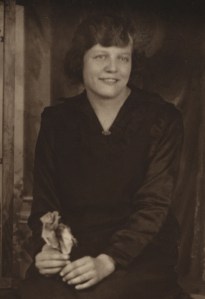 On April 8, 1921, the day after her 18th birthday, Ardella Anderson retired to her room where she boarded and worked, near the Malad, Idaho train depot. The caretakers, the Pecks, had gone out for the evening, the children were bathed and put to bed. Thinking she might not hear them when her hosts returned late, she went to the kitchen and uncharacteristically unlocked the kitchen door then returned to her bedroom. The spring night air was pleasant so she opened her window half way. At a quarter to twelve she awoke suddenly. A man stood in the bedroom doorway. Ardella had many friends and together they had frequent fun in the late hours dating, dancing, buggy and car riding. But this man’s dark shape, silhouetted by the dining room light, was not familiar. He stepped forward, staring down at her. She shuttered, gazing up at him. She tried to scream. He hit her in the jaw with his fist. She called for Mr. Peck, knowing he wasn’t home. The intruder stopped, backed away, ran through the door, turned out the light, and left the house. Ardella was shaken, but got the courage to run to the kitchen and lock the door. She returned to her bed. The Pecks finally came home, and learning of the intrusion, called the Sherriff who made an unsuccessful search for the man. Ardella, the friendly and smart school valedictorian, was never alone at night again. (By Kenneth R. Hardman, based on, “The Diary of Ardella Elizabeth Anderson Losee,” written from 1919 to 1929, transcribed by Jana Greenhalgh) #AncestorClips
 AncestorClips