
 “Mother gave an Indian a whack with an iron poker for stealing her biscuits hot from the oven, and a papoose a whipping for shooting her ducks with a bow and arrow. The mother of the papoose went mumbling around their camp saying that Mother had wronged her papoose. So Mother went to Washakie, the Chief, and Washakie gave the squaw and papoose ‘heck’…
The Indians always camped at my grandfathers (Lehi Nephi Hardman) farm by the Jordan River, and out at the ranch on the Oquirrh foothills. He gave many a beef to the Indians, believing what President Young taught in those days, that ‘it is better to feed them than to fight them.’ Mother’s policy was the same as her father’s. She never turned any needy person away from her door. She gave to others and went without herself.
All that could ever be said of a mother can truthfully be said of her. Although Mother spent only a few days in the schoolroom she had a deep appreciation of nature and of God. She instilled without stint, yea, beyond measure, into all of her children, a love for truth, obedience, a respect for authority, and an abiding faith in right, that the truth will prevail over error, and that the Gospel is the power of God unto salvation in temporal and spiritual matters. Long may Mother’s teachings live in the hearts of her descendants.”
(As recorded in Hardman Biographies, Ancestors of Sidney Glenn Hardman and Dorothy Mae Griffin, 2009. Adapted from histories written by Lehi and Francis’ daughter Amelia Hardman Sadler, as included in Goble’s Coon book.) #AncestorClips
(To learn more about Francis Ann Coon Hardman, see FamilySearch.org – Click here)
References:
Hardman Biographies : ancestors of Sidney Glenn Hardman and Dorothy Mae Griffin, 2009
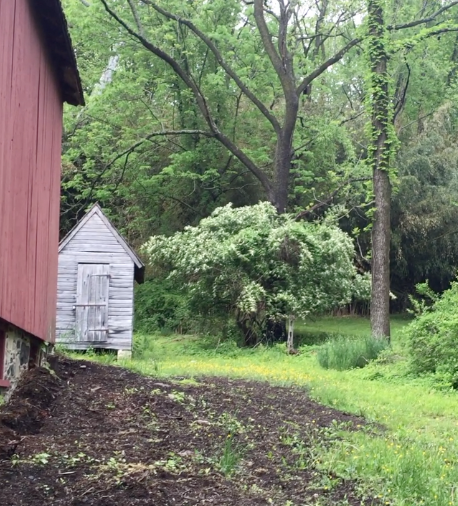 On September 11, 1777, General Washington collided with the British here at Brandywine Creek, Pennsylvania; booming cannons echoed 25 miles east to Philadelphia. There were heavy American losses on the battlefield. John Coon Jr. was serving his apprenticeship nearby and heard the blasts, a penetrating sound for a 9 year old. ([1] Goble, pg. 120, ref 12). The very next spring, the British launched “a secret night assault [10 miles] to the north in Paoli.” Not yet aware of the attack, “John Coon roused himself from…his thick…German-feather comforter. He rubbed the sleep from his eyes and stretched to greet the dawn. Clad simply in a long nightshirt, he stepped…into his britches…, pausing only to splash water on his face and straighten his thick [untidy] hair… His thoughts were on his chores, [and] the few moments he could spend in his forested hideaway at Brandywine Creek catching fish for breakfast, and [then] his afternoon at the cooper shop…” (Goble, pg. 123) But, instead of a pleasant spring morning, the penetrating sounds of death again rolled like thick fog across the Great Valley. Word spread that 150 Colonials were found dead. As the wounded “were transported…along the road through Chester,” the neighborhood wept at the groans of the dying. As a young man John experienced these realities but continued industrious and of service to family and country in Pennsylvania, Virginia, Ohio, and Illinois. At age 16, after the death of his father, he returned home to Lancaster, “rented a barn, and freighted [for the local militia] until he married,” (Goble, pg. 124, 129) at age 30. He was becoming a “tower of strength and manhood” upon whom his present and future family could trust. (see Goble, pg. 130) Thank you, to those who served here, and thank you, to my 4th great-grandfather, John Andreas Coon Jr.
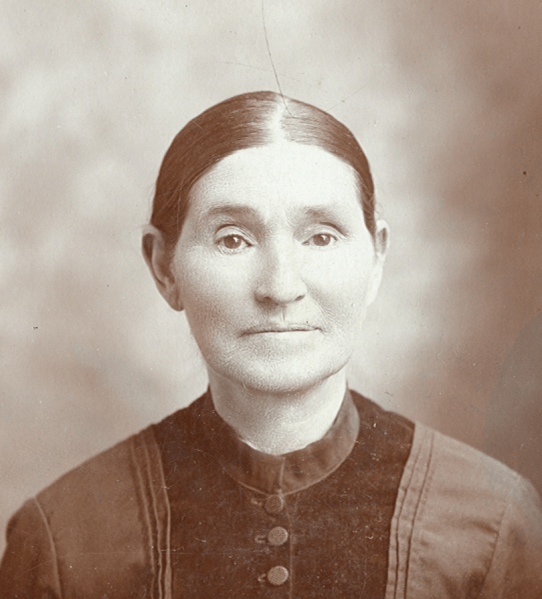 In 1848, five-year-old Francis Ann Coon and her siblings tried to cross the Garner pasture, but the bull saw them and charged. They ran for safety. Her sister “Permilia…climbed [a] tree and…[her brother] John handed all the younger children up before he climbed up himself” narrowly escaping the animals wrath.1 The Coon family, in route from Nauvoo to Council Bluffs was selected to go with the first pioneers to the Salt Lake Valley, but then Brigham Young assigned father Abraham Coon to remain a few years in Pottawattamie “to run a mill and help provide for the Saints…”2 The “corn was scarce,” but the “bluffs, glens, and running streams” were “picturesque.”3 Francis observed her father, Bishop Coon,4 a former member of the Nauvoo Legion and guard to Joseph Smith, faithfully help operate the Indian Mill on Big Mosquito Creek and care for families whose men had gone to serve in the Mormon Battalion2 including William Garner, the likely owner of the bull.3 At this young age, Francis experienced the faith of her parents, their determination to be endowed in the temple before leaving Nauvoo,2 and their sealing in Winter Quarters.5 After fulfilling their assignment in Iowa, Francis and her family walked1 most of the way to Salt Lake to carry out their hopes and dreams in Zion. It was in Salt Lake where Francis would meet her future husband.
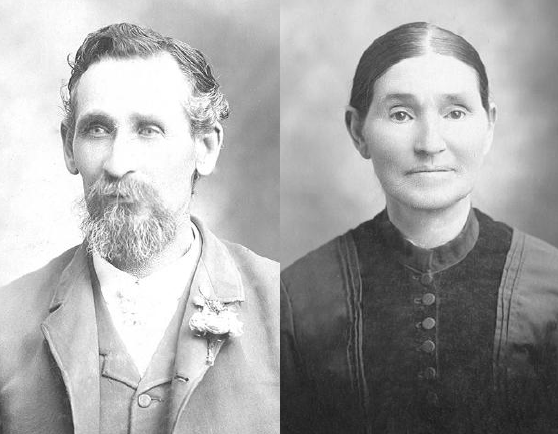 “It was a cold, frosty morning; a barefooted boy, with a skillet in his hands, knocked at the Coons’ door. Grandmother Coon opened their door to stare at the thin, sparsely clad lad. Father stated his errand and she drew him inside. All of the boys and girls of that family slept in the attic, as there was only one large room and an attic for the house at that time. Down the ladder they came to see the stranger, boys and girls in their nightclothes. One, a brown-eyed lass with long dark braids, stared into the soft blue eyes of the black/curly-headed stranger. How often I have heard my father say to my mother, later: ‘When I first saw you, my dear, you were in your nightgown.’ My father met my mother in the fall of 1842, when he was eleven.” (by Amelia Hardman Sadler, daughter of Lehi Nephi and Francis Coon, as included in Goble’s, Heritage of the Coon Family, adapted from family records in Hardman Biographies – Ancestors of Sidney Glenn Hardman and Dorothy Mae Griffin, 2009. Photo from family archives) #AncestorClips
 In about 1841, with their new Mormon faith and seven children under the age of eleven, my 3rd great grandparents, Abraham and Elizabeth Coon experienced the heavy persecutions that drove the Latter-day Saints from Missouri. More children came in Nauvoo Illinois but one died in infancy. As persecution followed them to Nauvoo, Abraham and Elizabeth headed west with the Saints. With her support, Abraham served as bishop, never turning away the needy, experiencing “wagon accidents, diseases, Indians, tough river-crossings, loss of cattle and wagons, and many deaths.” He served as a captain of ten, and looked after several families whose husbands or fathers were called away in the Mormon Battalion. Although losing four of ten children in death, one as a baby, and three as older teenagers including one to cholera, they pressed forward to the Salt Lake Valley. Thank you Abraham and Elizabeth for your faith, honor, service and hard work.
 AncestorClips