

As Group Leaders, Sister Hardman and I have conducted Addiction Recovery Program (ARP) meetings on Maui Hawaii for about six months. We also conduct a weekly remote session by Zoom for participants on Maui, Moloka’i, and Lana’i, and anyone else across Hawaii that may want to attend. We participate in ongoing training and coordination with our counterparts in other parts of the country. We have learned much on how to conduct these meetings and how to provide love and support to those with compulsive or addictive behaviors. With the Savior in our hearts, compassion comes naturally.
We’ve met over two dozen people who have come to our meetings; some once or twice, some for a month or two, and some more continuously. Since these meetings are anonymous and confidential, we don’t take roll but we get to know them by their first names. As we read and discuss the 12 steps of recovery we sense a measure of their pain followed by the hope they feel as they seek Healing through the Savior. Their observations about Gospel principles are often profound. Their sharing about their experiences are heartbreaking, and we are anxious for their hope and success in recovery. Some find it difficult to find helpful and appropriate individual support. They plead for help.
Why are we sharing this with our friends and family? To encourage you to consider providing support to anyone you may know struggling with compulsive or addictive behaviors and is striving to recover. Presently we have several who attend faithfully. However, they often feel isolated and wonder where to turn for individual help. We read in the guide book that “Support from others is important to help us find recovery and healing. Having someone we can turn to in times of weakness often proves to be essential… It is easy to fall back into these behaviors without the support and perspective of others. Connecting with others not only provides the encouragement we may need but also helps us remember that we are worthy of love as children of God.” You can imagine that this last point is so poignant and powerful; to receive love from others when one doesn’t feel worthy of love! What a consequential way to minister!
In the guidebook, participants are encouraged to benefit from the following sources of support:
- Heavenly Father, Jesus Christ, and the Holy Ghost
- Family Members
- Friends
- Ecclesiastical leaders
- Sponsors
- Recovery meetings, and
- Mental health and medical professionals.
Again, we invite each reader of this letter to consider making yourself available to persons in need of support. Learn about the program and how to support others at https://addictionrecovery.churchofjesuschrist.org.
(From the list above, “Sponsors are people who have found recovery by working through the 12 steps. Because of their experience, they know how to help…” In the Church’s program, sponsors are not assigned. Asking for help is a personal decision of prayerfully considering trustworthy people who they feel comfortable with or would be most helpful.) https://www.churchofjesuschrist.org/study/manual/addiction-recovery-program-2023/17-appendix-support?lang=eng)
On Sunday, we attended our stake conference, enjoyed Zoom visits with our family, then we met by Zoom for the coordination meeting with our Hawaii Family Services ARP manager and other Group Leaders. They serve across the Hawaiian Islands and like us, come from across the country. We feel blessed to associate with these wonderful service missionaries who give of their time and hearts to provide compassion and support to those in need. May we encourage our readers, especially seniors to consider any kind of service mission.
Other activities – For physical exercise and fresh air, Sister Hardman and I regularly walk the beach. For emotional health we continue to visit parts of the island, meet people, and serve in our local ward as youth Sunday School teachers. For spiritual health we read scriptures and other inspiring works including General Conference talks, BYU Devotionals, and church publications.
A great communications case study – We also enjoy reading local church history; specifically, “George Q. Cannon, Hawaiian Missions.” This week we read a journal entry that we recommend, dealing with hurt feelings and misunderstandings among friends, companions, or in this case fellow missionaries. We are certain all can relate to their experience.
Monday, 6 September, 1852. “…While eating breakfast Bro. Hawkins made some remarks about the field that he had been appointed to preside over and said he felt it to be a large one and he would like it if someone could take charge of Kula branch if they felt like it &c. &c. Bro. Hammond,” agreed and said, “that the way things had been going on was not calculated to do well, no one having a settled place, but first one preaching at one time at a place and then another following and preaching at that same place, & the first leaving things partly settled thinking that the one following would attend to it…” Elder Cannon asked how it could be avoided and referred to their previous council meeting where, “we had taken measures to prevent confusion of this kind… There were several remarks and replies made backward and forward and considerable feeling manifested…” Allusions, insinuations and assumptions of partiality heated the conversation. “…I then arose and told my feelings…and disclaimed all thought of doing as he said I had done in regard to favoring some to the prejudice of others &c. &c. And I wished him to state in what respect I had done this and what his reasons were for making the remarks he had.”
The group conversed back and forth at length retracing the interactions that caused the feelings. Some had questioned the authority of others. Some had felt slighted from others. Mistakes were acknowledged and apologies were given for unintended expressions or snubbing, and rational decisions were made.
One “had felt that he was treading on toes and therefore he had made the remark ‘that he was only a passenger on board the Ship.’ These things had grieved him because he thought there was a disposition to keep him back especially when he thought that he had made sacrifices as well as his brethren [and] that he had done all he could do. I arose and attempted to speak but could not as my feelings were so much wrought up that I could not express my feelings… I never, to my remembrance, in my life experienced such feelings, they were exquisite and I felt cut down to think that Bro. H. [Hammond] & I had mingled together and I had unbosomed myself to him time and again and yet all this time he had these feelings against me and had hinted to me and I had been so dull that I did not understand—these thoughts oppressed me and it was in vain that I tried to express them for a while…I prayed to the Lord to calm my feelings by His Spirit and I did experience a calm…the storm had passed and the gush of feeling had subsided and I felt that it would all come out right. I arose and spoke and was enabled to tell my feelings and I had the spirit—I reminded Bro. H. that…I merely told my feelings at that time without the least design to retard him in any particular…”
“We had a good deal of talk and laid our feelings open one to the other and settled it all satisfactorily to all parties…I thought this worthy of note that I might be reminded to ascertain at all times the feelings of the brethren and to cultivate at all times a spirit of candor that we might have no misunderstandings.”(https://www.churchhistorianspress.org/george-q-cannon/1850s/1852/09-1852)







 It was Christmas of 1909 just before my dad was to come home [from his two-year mission.] We were down to board floors and paper curtains [having sold the furniture piece by piece.] We had large five-gallon lard cans to sit on; a stove, table, and a bed that we all slept in. We sat in bed and sang Christmas carols until…it was time to go to sleep. We only had a bowl of rice that night for our dinner… We went to sleep hoping…for Santa to come. I woke up to the sound of crying. I went into the other room and found Mama crying. I asked what the matter was. She said…she was so grateful and happy to her Heavenly Father, and told me to go back to bed so Santa could come. I…was wakened again by her sobs. I went to sleep the third time and woke up at 7:30 am with mother still crying. As we all came out of the bedroom she made us kneel in prayer before we could see our toys. I will never forget the prayer my mother offered, thanking the Lord for his goodness to us. We then went out on the porch; there was a doll and dishes for the girls, a tool box for the boys and a small decorated Christmas Tree and a basket of food… We danced around the tree and sang and went to bed that night with our hearts full of happiness and our stomachs full of good food. Brother Alma Winn was our Santa and he had eight children of his own… My mother had cried and prayed all that night. Her prayers were answered… How grateful I am for the faith of my mother and grateful…that we five little ones weren’t forgotten by a “Santa” who had been inspired to come and help us in time of need.
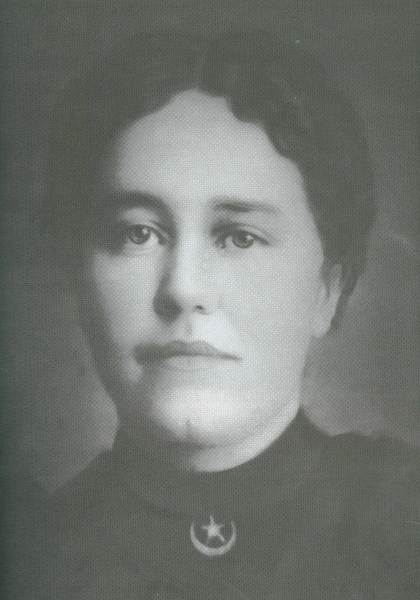 Hannah Elizabeth Josephson, came into the world (St. John, Idaho, to be exact) on November 27, 1877, 2 days before Thanksgiving. She was the 3rd of 12 children born to Lars and Anna Josephson, immigrants from Sweden. There was great love and respect in this large but united family. They were known as “one of the best behaved in the valley.” Hannah was a “pretty brunette,” industrious, and “of a cheerful and religious disposition.” “I used to pray every day and trusted in the Lord,” she said. “I had my prayers answered many times.” The children were taught reading, writing, arithmetic, and geography by their mother, so Hannah was well prepared to enter school at age 6, and continued through the 8th grade. In 1887, nearly all family members including her father had a brush with Typhoid Fever. Three months of dedicated nursing and service by the church and community pulled them through. There were no deaths in the family, but her brother Levi stuttered badly the rest of his life. Hannah was baptized in 1891. She was inspired by her parent’s faith and devotion. “Many times I saw [my father] ride on horseback a distance of 15 miles to attend priesthood meeting. My whole family was religious at heart.” Hannah served as 2nd Counselor in the Young Ladies Mutual Improvement Association at age 18, admired church leaders, and remained active all her days. She too, had many admirers. While courting the man of her choice, “Hannah gave [him] to understand that her husband had to be worthy to take her to the temple.”
 During the boom-town 1950s in Los Angeles, Dona Hansen, the queen of the church Gold and Green Ball, and daughter of a self educated businessman and a most charitable mother, culminated her youth in what she thought would be the crowning event, marriage to a promising man. A short time later while anticipating their first born, her husband left her. She was devastated. “I didn’t think anyone would want to marry a divorced woman with a little son,” she thought. Dona prayed as she always did, was blessed by the prayers of others, and remained “close to [her] Father in Heaven and Savior.” Some time later Dona received a proposal of marriage from a man not of her faith, and she went away to Salt Lake City to consider her future seeking direction in the Temple. She felt inspired to return to Los Angeles. Upon her return, she felt and knew that he was not the one. To her surprise, her fiancé informed her, “I have just met a fellow at church. In fact, he is just what you are looking for.” Driven by the Spirit of the Lord, she stood in church and bore her testimony. Her fiancé and friend Ferril Losee were in attendance. Ferril thought, “She is wonderful but… to good for me.” A short time later, noting the absence of the ring, Ferril asked Dona out on a date. They drove to the beach where, as the sun set upon a beautiful day, the sun rose on a glorious union. Ferril said that he “would be the happiest man on earth if [Dona] would consent to marry him.” Dona knew the Lord was in it, and agreed. (by Kenneth Hardman, adapted from, Losee, Ferril A.,
  Some major customers didn’t pay; and Glenn’s cabinet business began to fail. Dorothy was very concerned about family bills and groceries. In the 1960’s they built their second dream home, welcomed their sixth child, and served anxiously in church assignments while building a growing company. Not able to focus on her church leadership position, she thought to ask for a release, and find a job. Glenn said, “No.” But her thoughts persisted. She had served well; surely God would not expect more. She couldn’t sleep, she prayed, she cried, and prayed more. She decided to ask for the release the next day. Thinking this choice would relieve her pain, she tried to sleep. “Not so! I turned and tossed and wept some more,” she said. In desperation she asked God, “Isn’t it the right decision?” Immediately, a flickering light in her mind became bright and she distinctly knew her decision was not the Lord’s will. “I did not understand why,” she said, “but I told him I would continue to serve as long as He had need of me…” She then felt peace. She new they would be blessed. Years later she looked back and realized that God new what was coming; what the family needed, and who needed her at that time. Dorothy’s specific fourth year of service was the exact time period needed for God to work miracles through her in the lives of at least two other people. Dorothy’s oldest daughter became deathly ill. The failure of the family business had resulted in a new job for Glenn, and relocation a year later that put the family in proximity to doctors who could diagnose and treat her rare disease.
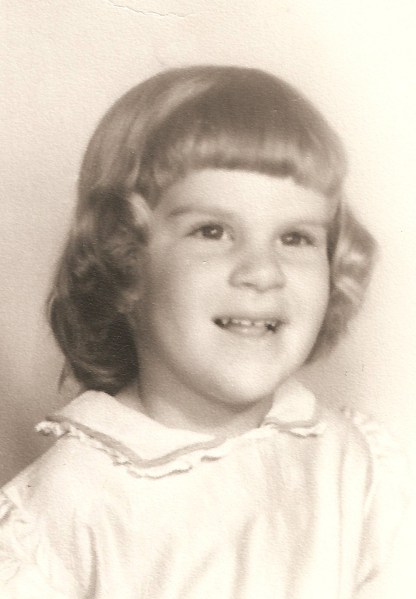 Cheryl Diane Hardman was born in January, 1951. As a brand new baby, she received a blessing by the hand of her father while he was on military training leave, then she didn’t see him again for 16 months while he served overseas for his country. She grew up a bright child. At the age of 3, Knowing that her baby brother loved bananas, Cheryl turned again to the hand of her carpenter dad and said in all seriousness, “Daddy, would you bring home some wood to make a banana tree?” As she grew, Cheryl did what most children did; she rode bikes, got cuts, had stitches, took music lessons, entered science projects and won awards. When older with 5 younger siblings, Cheryl politely told her parents that 6A students, especially the girls, “do not ride their bikes to school anymore. They are too old for that.” As a teen, Cheryl didn’t need to be reminded of homework. She enjoyed classes like typing, seminary, history, English, Spanish, science, and algebra. She even made some of her own clothes. Her favorite TV shows were, The Mouse-ka-teers, and Bonanza. With high hopes, her parents looked forward to great things in life for her. In 1969, fulfilling her college dream, Cheryl slowly developed debilitating symptoms from a disease whose diagnosis evaded doctors until Cheryl could not walk or talk; death was at the door. That year, as mankind overcame great odds and put a man on the moon, Cheryl desperately struggled and with the help of prayers, family, and many doctors, overcame the disease. She finished college, became a teacher, served others with handicaps, married, and raised a great family, thereby touching mankind for good. Thanks Cheryl, you are a great sister.
 “Grandmother, Rachel Ault Elton, was born April 19, 1859, at Stony Stratford, Buckingham, England… She was the third child of a family of thirteen children. Through misfortune of one type or another, Grandma had only two sisters and one brother who lived to adulthood. When Grandma was only five years old, her folks decided to leave England and come to Zion. They sailed from Liverpool on September 3, 1873, on the Steamship Wyoming. Mr. John B. Fairbank was the captain of the ship. In addition to her parents, two brothers, and a baby sister, there were 410 saints on the ship. Even though Grandma was very young, she remembered and has often told of how they barely escaped shipwreck when the ship became lodged one night on a large sand bar near the Sabel Islands (300 km southeast of Halifax, Nova Scotia). On this occasion everyone was called from their beds to the deck and asked to kneel in prayer. After praying for safety, they all crowded to one end of the deck, and with human balance, they dislodged the ship from the sand-bar. I am sure that it was only the result of their praying and the will of our Father in Heaven that saved them.” (By Beverly Elton Hunt and others as compiled in Hardman Biographies – Ancestors of Sidney Glenn Hardman and Dorothy Mae Griffin, 2009. Photo from family archives)
 AncestorClips