
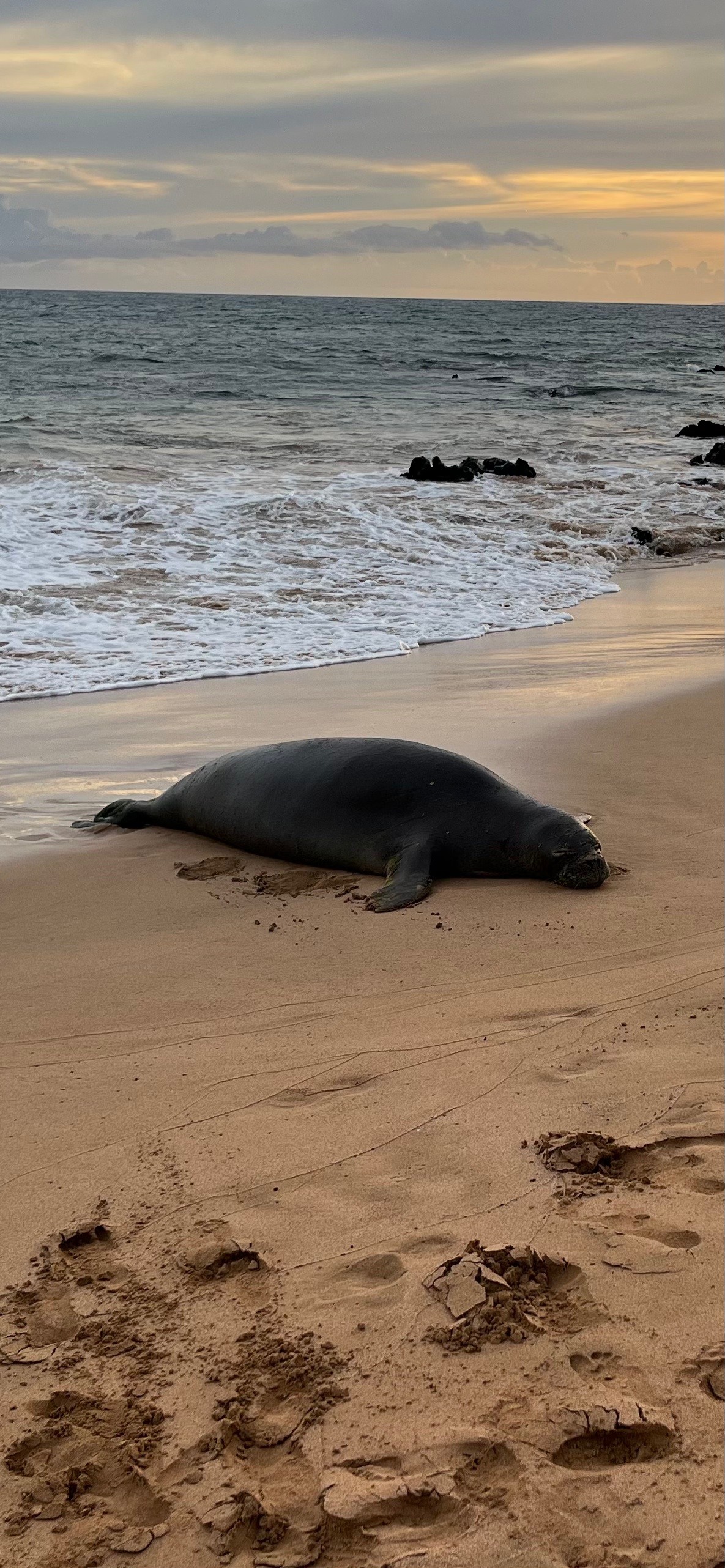




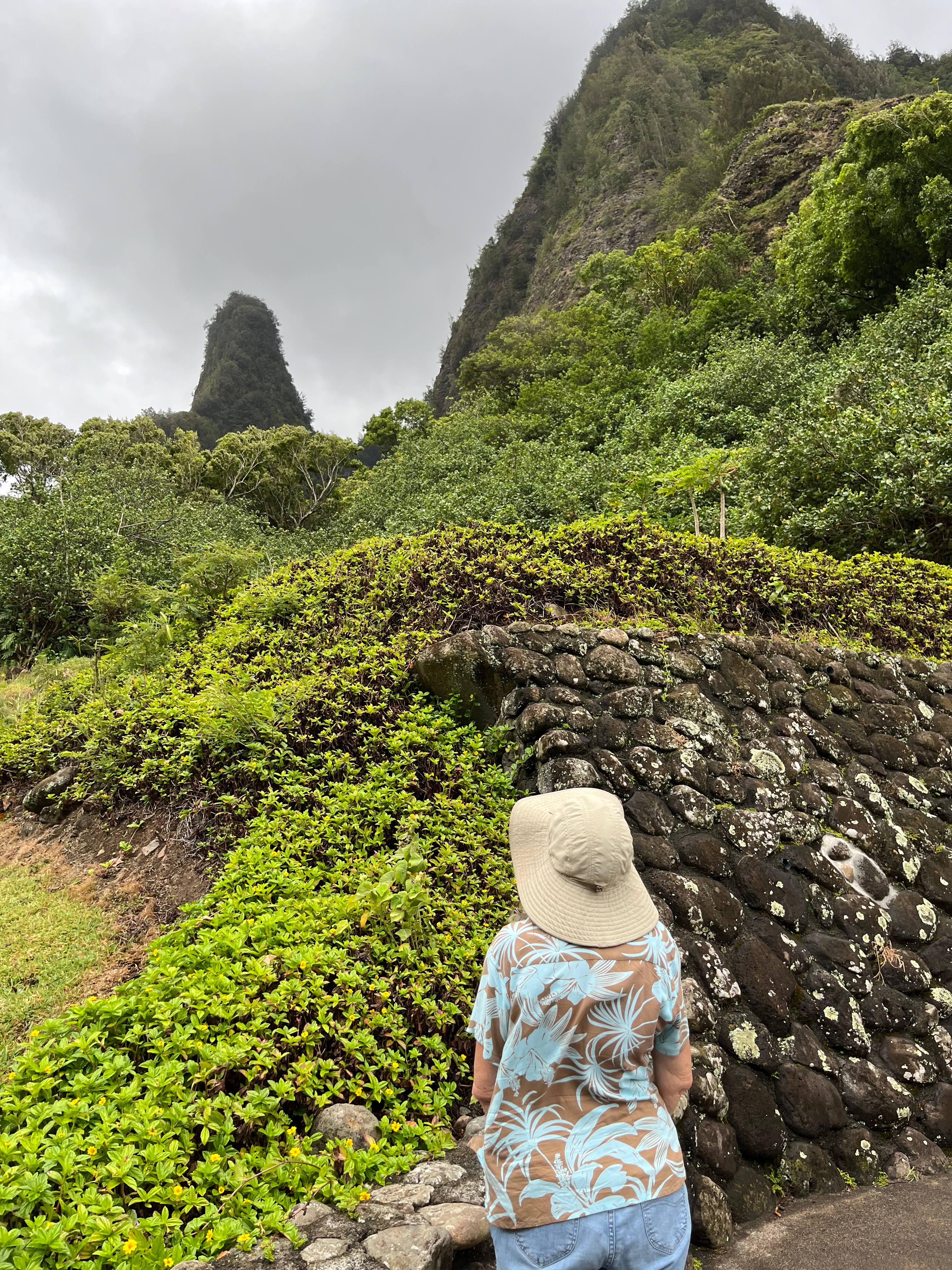

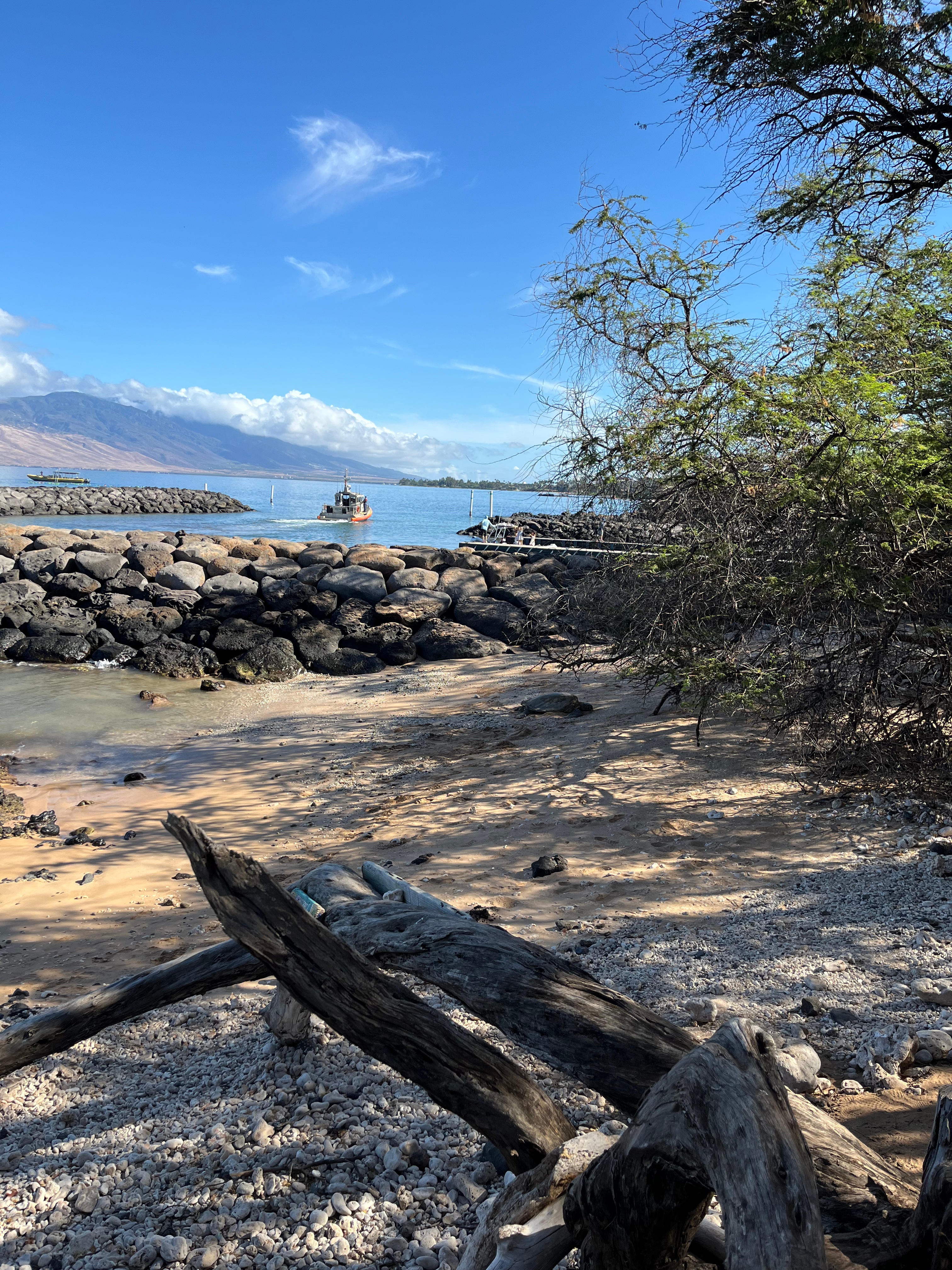
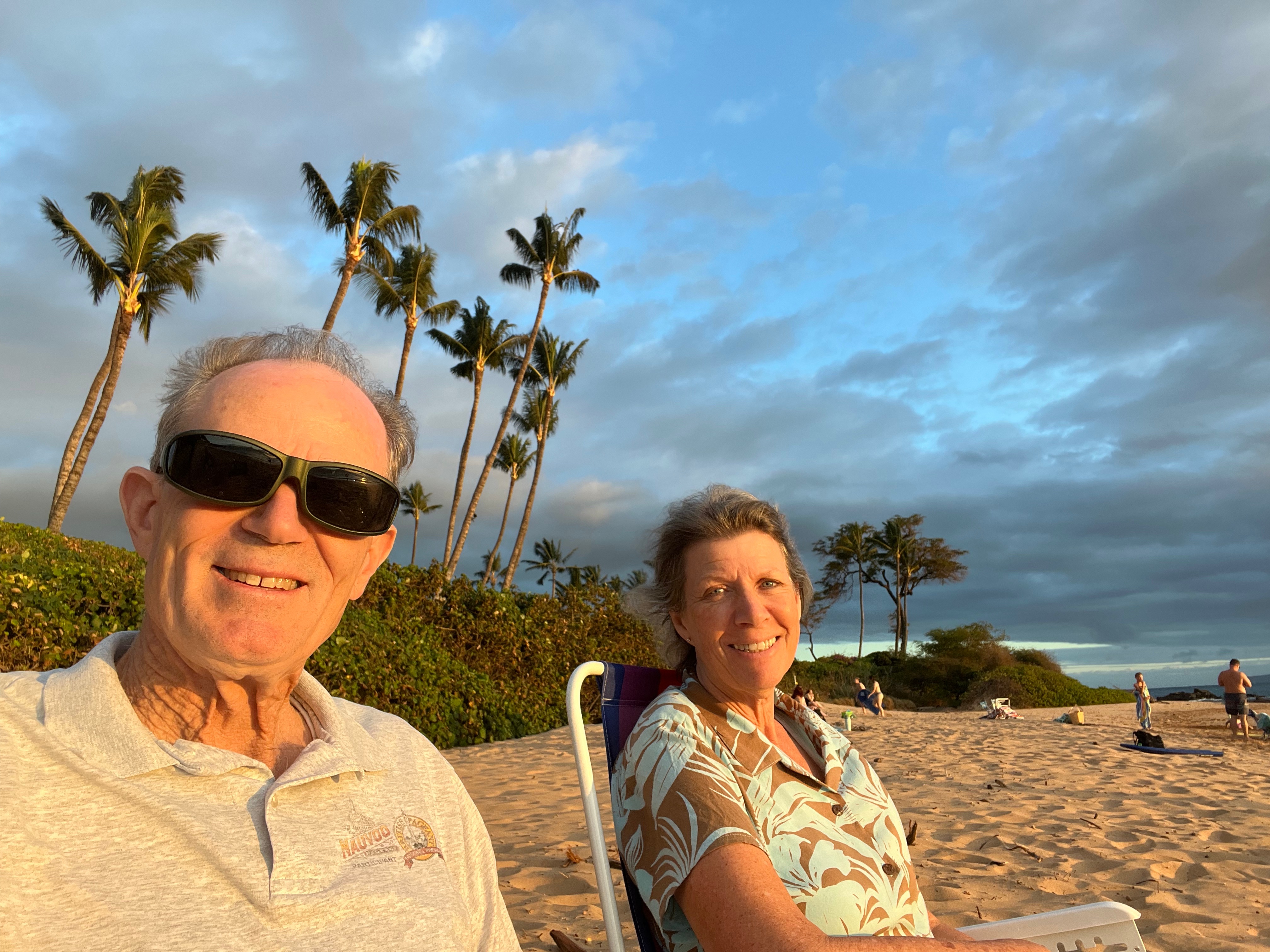
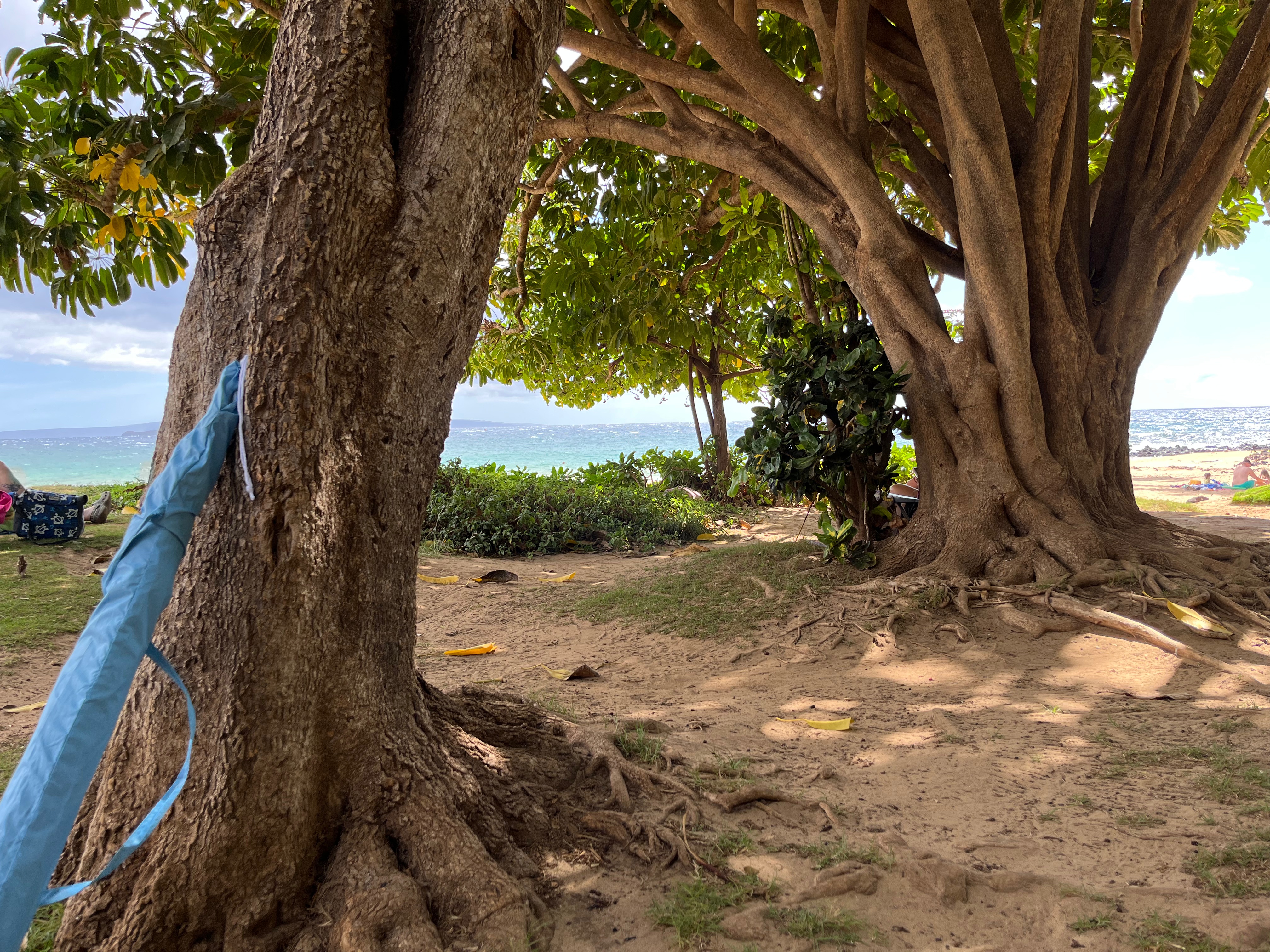
Each day this past week we took time to prepare for upcoming assignments, and to care for ourselves spiritually, physically, and emotionally. We exercise, write and sing about the beauties of life (song: Life Surrounds), walk on beaches or piers, wade through the Iao Stream, admire God’s hand in the infinitely varying sunsets above the ocean, and meandering turtles below. On one evening while reading on the beach, a large seal parted the waves, crawled up the beach and drew a large crowd. The look in his eyes was, “It’s been a long journey. I’m tired. Leave me alone.” On another occasion Joan found a sleeping turtle on a small beach with a rock on the center of his shell. It is illegal to touch a turtle, but Joan felt compassion, tiptoed through the sand, and removed the rock. Then received a wink from the turtle that seemed to say, “Thank you.”
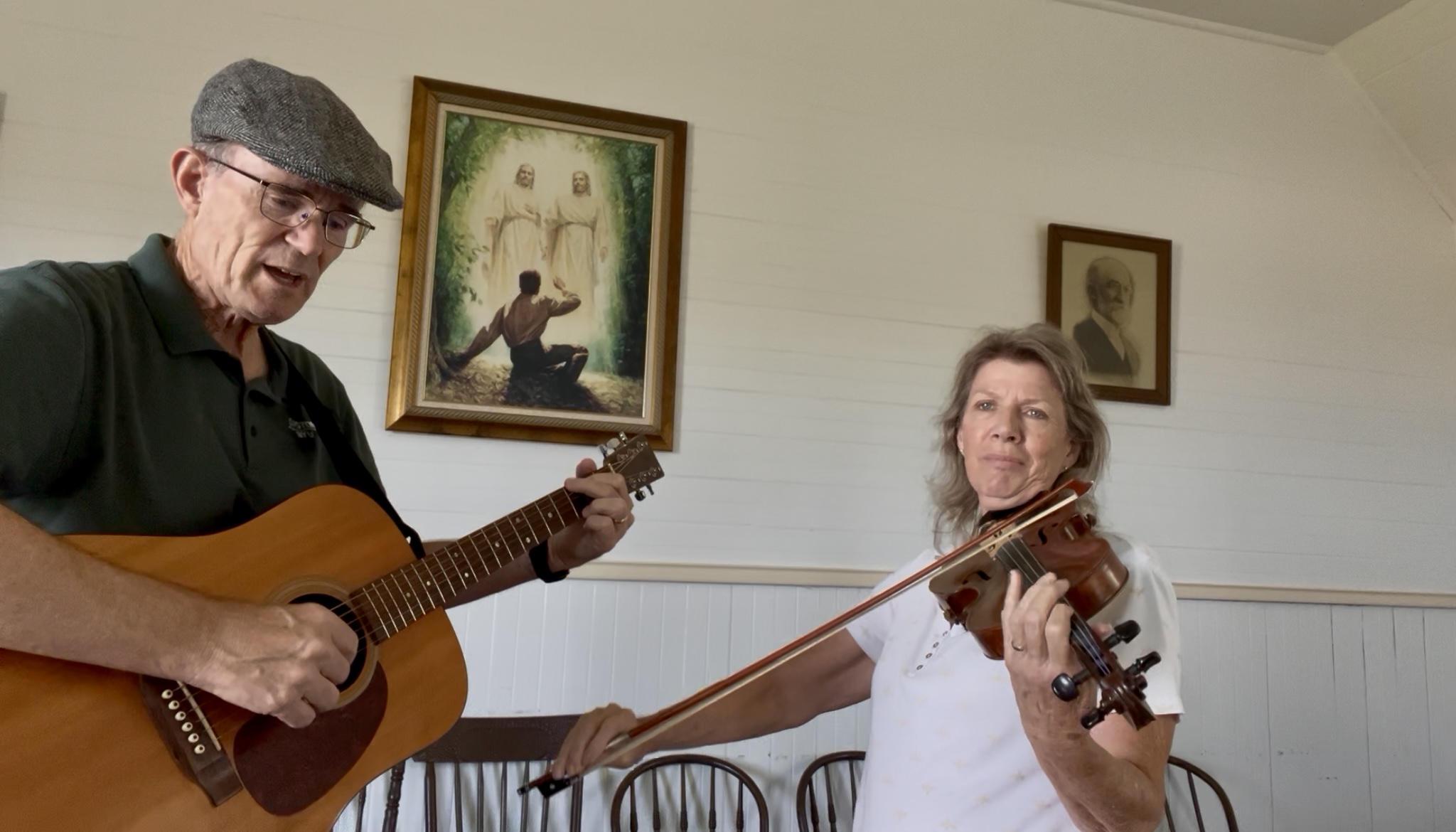
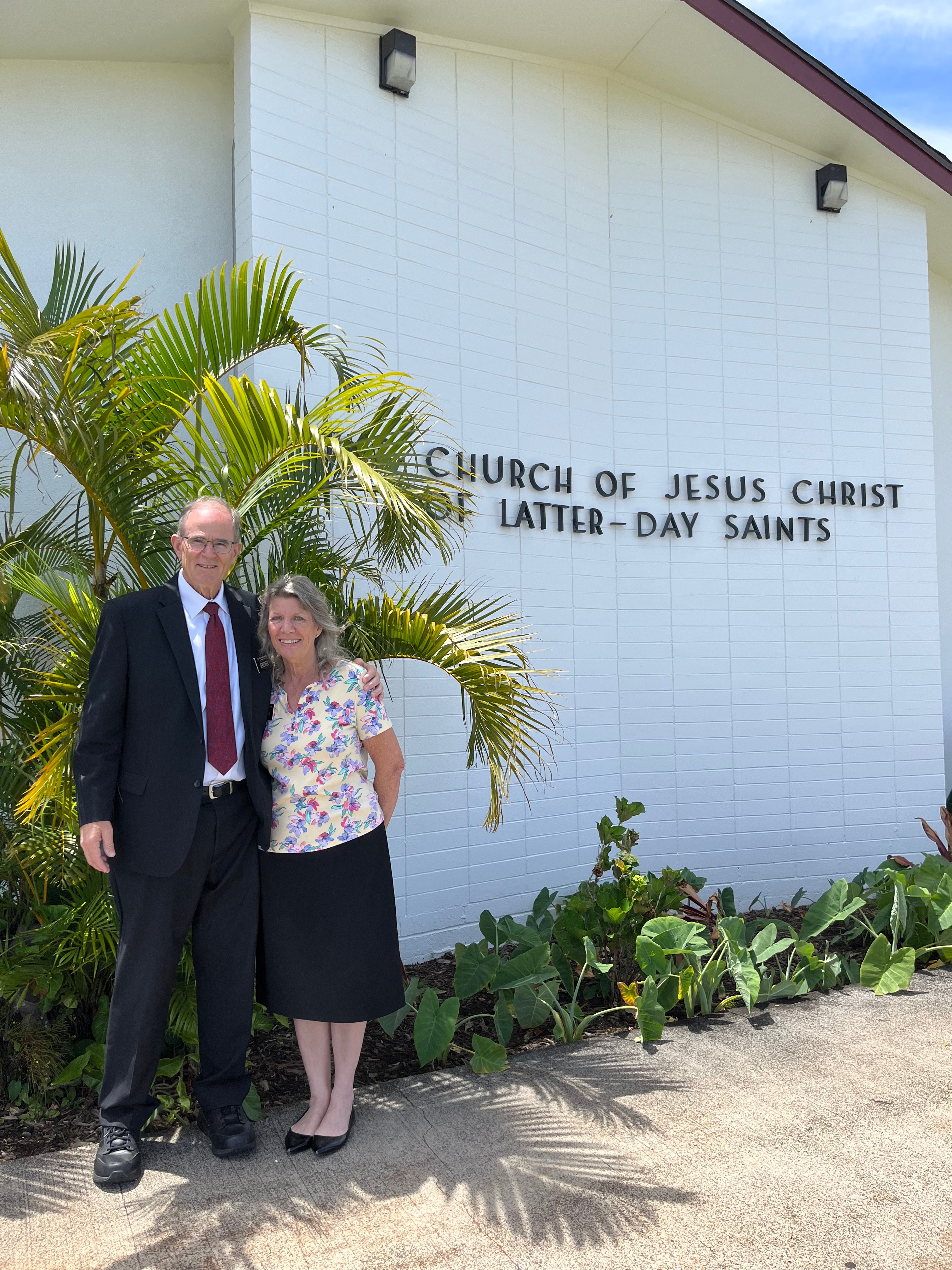
We prepared and practice a sacred hymn in a sacred place. We prepared an overview and testimony of the addiction recovery program which we then presented three times on Sunday (5th Sunday combined adult meetings) rushing to three different meetinghouses, on three different parts of the island. Our presentation included a tender review of Alma 7:11-12, a scripture that President Dallin H. Oaks said, “is the single clearest of all the scriptures on this essential power of the Atonement…” (Oaks, Strengthened by the Atonement of Jesus Christ, Oct. 2015) During the presentation we set a spiritual tone by singing the duet we had prepared, “My Shepherd Will Supply My Need,” (new Hymn 1014) while accompanying ourselves with violin and guitar. These were special moments for us and judging by expressions and spirit, special for the members. We reviewed church online resources with them, bore testimony of the power of the Savior to assist us in our needs, and with love invited them to invite others who could benefit from the program.
During this week’s support meeting several new people came. We focused on Step-3, “Decide to turn our wills and our lives over to the care of God, The Eternal Father, and His Son, Jesus Christ.” The basic principle is to Trust in God. The spirit was there, and we did our best conducting the meeting, discussing the principles, and bearing testimony at the end. However, as is too common for me (an addiction of pride), I doubted my effectiveness, wondering what I could’ve done differently or conveyed better for these beautiful, humble people. (I noticed that I was in need of the very principle we were teaching, that is: Trust in God).
As noted previously, Joan and I are reading, “The Journals of George Q. Cannon, Hawaiian Mission, 1850-1854). In 1851 Elder Cannon set out from Lahaina to live among the Hawaiian people in order to help him learn the language and convey the Gospel more effectively. Similarly, Joan and I occasionally set out to learn local history (we went to the Wailuku museum this week) and we read about Elder Cannon’s experiences with the people so that we might understand their culture and be more effective sharing the Savior’s message and healing power. On one occasion after struggling to preach in their language, in anxiousness Cannon wrote, “I felt very much depressed after this meeting, it seems a hard business to explain things. When will I be so that I can do justice to the principles of which I am the bearer?” On another occasion, speaking of his prayer to the Lord for help obtaining the language he said, “If I did not know that he would order everything for the best, I should be tempted to be discouraged.” (pg. 89) About the time of his first convert baptisms he wrote, “I have not felt the spirit of the Lord more… than I did this afternoon, and the people felt it… I had been enabled by his spirit to explain some things to the people few as they were that I had been sent to teach…” (pg. 95)
At our addiction support meeting the subject was Trust in God, and so having done our best to prepare and trust in him to execute the evening as he and his inspired resources prescribed, like Elder Cannon I should have had trust that “he would order everything for the best” that our best preparations and his process would work in the lives of those specific children of God who attended. Instead, I came home not feeling rest, but burden, the burden of self-doubt and self-criticism, whereas I should’ve taken his yoke upon me, not just words, but with full trust so that I might feel of his rest (Matthew 11:28-30) and not be burdened by the pride that was driving my unrest, the pride of wondering what I could’ve done differently or how I could’ve executed it differently (I notice the word “I” too much in the last sentence; pride). Sister Hardman and I made our best efforts. We studied, we prayed, we prepared. And in the session, we loved, we read, we discussed, and we carried out the class. And judging by the faces present many were touched and many felt sincere and good feelings. We have confidence that many are feeling more power in Christ. We take to the Lord our best offering, and He makes something beautiful.





 Glenn Hardman and Dorothy Griffin; did they become good independent of outside factors? Certainly, not. Did any of this goodness come from their parents and ancestry? Certainly, yes. Dorothy spoke of her childhood. “I am truly grateful that my parents were always active and that they taught us by their example that church was the place we were to go, that activity in the church would bring joy and satisfaction to our lives. Though I have no memory of a burning testimony in those days, I know the seeds were planted then for my love of the church as I have grown older.” Similarly, Dorothy wrote of Glenn, “He went to Primary and learned about courage and being pure in heart, to be a cheerful helper to his father and mother every day, to say thank you, to obey, to be courteous at home, school and Primary, to pray and to appreciate the beautiful world.” As Glenn and Dorothy continued to grow in their youth, they made choices that brought them in contact with additional sources of help and divine instruction. While a young adult, Dorothy received an assignment she thought miraculous that gave her opportunity to serve in new ways, making her realize the source of her talents, and how she could use them for much good. “I began to see,” she wrote, “what the patriarch had meant when he told me I had talents that would manifest themselves in the positions of responsibility which I would have…” Glenn demonstrated his integrity when on his own in California, surrounded by a world of opportunities for good and bad. In a letter to his parents back home, some trusted friends wrote, “He never misses a day without coming in and reporting in. He is only going with church boys and girls and taking in the church activities. Dorothy Griffin, the girl he takes most, is a swell Mormon girl.” I can see how my life was and is influenced by their lives… I can see their influence in my life, in the lives of all their children, and their grandchildren and their great-grandchildren.
 It was Christmas of 1909 just before my dad was to come home [from his two-year mission.] We were down to board floors and paper curtains [having sold the furniture piece by piece.] We had large five-gallon lard cans to sit on; a stove, table, and a bed that we all slept in. We sat in bed and sang Christmas carols until…it was time to go to sleep. We only had a bowl of rice that night for our dinner… We went to sleep hoping…for Santa to come. I woke up to the sound of crying. I went into the other room and found Mama crying. I asked what the matter was. She said…she was so grateful and happy to her Heavenly Father, and told me to go back to bed so Santa could come. I…was wakened again by her sobs. I went to sleep the third time and woke up at 7:30 am with mother still crying. As we all came out of the bedroom she made us kneel in prayer before we could see our toys. I will never forget the prayer my mother offered, thanking the Lord for his goodness to us. We then went out on the porch; there was a doll and dishes for the girls, a tool box for the boys and a small decorated Christmas Tree and a basket of food… We danced around the tree and sang and went to bed that night with our hearts full of happiness and our stomachs full of good food. Brother Alma Winn was our Santa and he had eight children of his own… My mother had cried and prayed all that night. Her prayers were answered… How grateful I am for the faith of my mother and grateful…that we five little ones weren’t forgotten by a “Santa” who had been inspired to come and help us in time of need.
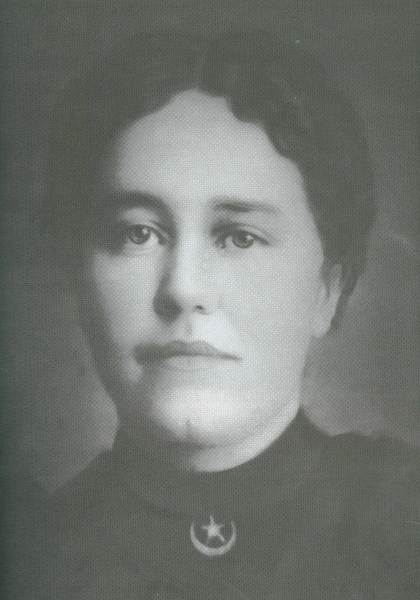 Hannah Elizabeth Josephson, came into the world (St. John, Idaho, to be exact) on November 27, 1877, 2 days before Thanksgiving. She was the 3rd of 12 children born to Lars and Anna Josephson, immigrants from Sweden. There was great love and respect in this large but united family. They were known as “one of the best behaved in the valley.” Hannah was a “pretty brunette,” industrious, and “of a cheerful and religious disposition.” “I used to pray every day and trusted in the Lord,” she said. “I had my prayers answered many times.” The children were taught reading, writing, arithmetic, and geography by their mother, so Hannah was well prepared to enter school at age 6, and continued through the 8th grade. In 1887, nearly all family members including her father had a brush with Typhoid Fever. Three months of dedicated nursing and service by the church and community pulled them through. There were no deaths in the family, but her brother Levi stuttered badly the rest of his life. Hannah was baptized in 1891. She was inspired by her parent’s faith and devotion. “Many times I saw [my father] ride on horseback a distance of 15 miles to attend priesthood meeting. My whole family was religious at heart.” Hannah served as 2nd Counselor in the Young Ladies Mutual Improvement Association at age 18, admired church leaders, and remained active all her days. She too, had many admirers. While courting the man of her choice, “Hannah gave [him] to understand that her husband had to be worthy to take her to the temple.”
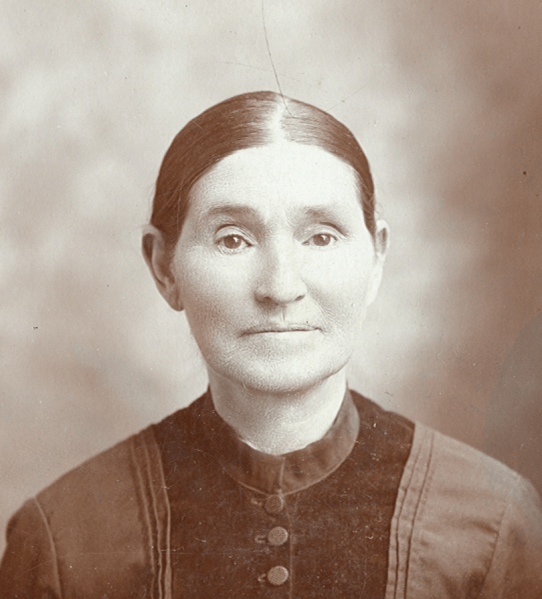 In 1848, five-year-old Francis Ann Coon and her siblings tried to cross the Garner pasture, but the bull saw them and charged. They ran for safety. Her sister “Permilia…climbed [a] tree and…[her brother] John handed all the younger children up before he climbed up himself” narrowly escaping the animals wrath.1 The Coon family, in route from Nauvoo to Council Bluffs was selected to go with the first pioneers to the Salt Lake Valley, but then Brigham Young assigned father Abraham Coon to remain a few years in Pottawattamie “to run a mill and help provide for the Saints…”2 The “corn was scarce,” but the “bluffs, glens, and running streams” were “picturesque.”3 Francis observed her father, Bishop Coon,4 a former member of the Nauvoo Legion and guard to Joseph Smith, faithfully help operate the Indian Mill on Big Mosquito Creek and care for families whose men had gone to serve in the Mormon Battalion2 including William Garner, the likely owner of the bull.3 At this young age, Francis experienced the faith of her parents, their determination to be endowed in the temple before leaving Nauvoo,2 and their sealing in Winter Quarters.5 After fulfilling their assignment in Iowa, Francis and her family walked1 most of the way to Salt Lake to carry out their hopes and dreams in Zion. It was in Salt Lake where Francis would meet her future husband.
 During the boom-town 1950s in Los Angeles, Dona Hansen, the queen of the church Gold and Green Ball, and daughter of a self educated businessman and a most charitable mother, culminated her youth in what she thought would be the crowning event, marriage to a promising man. A short time later while anticipating their first born, her husband left her. She was devastated. “I didn’t think anyone would want to marry a divorced woman with a little son,” she thought. Dona prayed as she always did, was blessed by the prayers of others, and remained “close to [her] Father in Heaven and Savior.” Some time later Dona received a proposal of marriage from a man not of her faith, and she went away to Salt Lake City to consider her future seeking direction in the Temple. She felt inspired to return to Los Angeles. Upon her return, she felt and knew that he was not the one. To her surprise, her fiancé informed her, “I have just met a fellow at church. In fact, he is just what you are looking for.” Driven by the Spirit of the Lord, she stood in church and bore her testimony. Her fiancé and friend Ferril Losee were in attendance. Ferril thought, “She is wonderful but… to good for me.” A short time later, noting the absence of the ring, Ferril asked Dona out on a date. They drove to the beach where, as the sun set upon a beautiful day, the sun rose on a glorious union. Ferril said that he “would be the happiest man on earth if [Dona] would consent to marry him.” Dona knew the Lord was in it, and agreed. (by Kenneth Hardman, adapted from, Losee, Ferril A.,
  Some major customers didn’t pay; and Glenn’s cabinet business began to fail. Dorothy was very concerned about family bills and groceries. In the 1960’s they built their second dream home, welcomed their sixth child, and served anxiously in church assignments while building a growing company. Not able to focus on her church leadership position, she thought to ask for a release, and find a job. Glenn said, “No.” But her thoughts persisted. She had served well; surely God would not expect more. She couldn’t sleep, she prayed, she cried, and prayed more. She decided to ask for the release the next day. Thinking this choice would relieve her pain, she tried to sleep. “Not so! I turned and tossed and wept some more,” she said. In desperation she asked God, “Isn’t it the right decision?” Immediately, a flickering light in her mind became bright and she distinctly knew her decision was not the Lord’s will. “I did not understand why,” she said, “but I told him I would continue to serve as long as He had need of me…” She then felt peace. She new they would be blessed. Years later she looked back and realized that God new what was coming; what the family needed, and who needed her at that time. Dorothy’s specific fourth year of service was the exact time period needed for God to work miracles through her in the lives of at least two other people. Dorothy’s oldest daughter became deathly ill. The failure of the family business had resulted in a new job for Glenn, and relocation a year later that put the family in proximity to doctors who could diagnose and treat her rare disease.
 AncestorClips