
In Wyoming, with sweat down our backs and dirt under our fingernails, we contemplated in Martin’s Cove, pushed and pulled up Rocky Ridge, were pelted by hail at Rock Creek Hollow, and felt the aid of angels. Every year more groups don the time-period clothing, learn about an ancestor, and walk in their steps. If you ever have the opportunity, don’t hesitate, embrace the call and join the trek. It won’t be easy, but with determination you can come to know yourself, your ancestors, and God, better.
Dear friends, Joan and I have participated in many ‘handcart treks.’ In 1997, our stake called us to be a ‘ma’ and ‘pa’ on our first trek, and to assemble a trek band. Joan researched music, we wrote a few songs, and we enlisted family members to play and sing. On that first trek, we rolled into camp each night, performed family duties, then assembled with band members and performed music for the camp fireside and square-dance. It was delightful to watch hundreds of youth with ‘real’ smiles stir-up the dust and pound down the sage while dancing the Virginia Real.
In the years that followed, we were invited to other ward and stake treks. We’ve performed in mud, wind, rain, and snow. With gratitude, we also performed on calm nights when the painted sunset slowly yielded to the stars exposing God’s eternal creations. We met wonderful people who came because of faith in God, who stood before the company in remote meadows bearing testimony of their love of Jesus Christ, their companions, and those who had gone before.
God has a reason for inspiring our leaders to conduct such experiences. We love our ancestors and feel their closeness as promised by prophets. We fervently ask you to share our message with your friends and all who might someday go on a trek. To help, here is a story (link) and song about one of our ancestors, written by Joan Hardman called, “Before the Wind.” Come with us to Denmark and Sweden, their homeland. (Illustration by Ken Hardman)
https://ancestorclips.com/2018/07/02/andrew-and-anna-peterson-before-the-wind/

 In 1847, on the north shore of Zealand, as Danish citizens fought for “freedom of press, and religion,”1 fourteen-year old Hans Sorensen finished school and entered apprenticeship. That same year his mother and grandmother died. In 1849 the monarch gave in and the people won their desired freedoms.2 With a feeling of opportunity, Hans studied with a demanding shoemaker, and using local materials he became skilled at constructing shoes and saddles with maple pegs and strong flax thread.1 He was among the “industrious, peaceable, and skillful,”3 of his people. At age 20 his brother and father died4 but he continued his trade and service to his community. Nine years later, he married Maren Kristine Hansdatter also of his Parish and opened a shoe-shop in the nearby town of Tisvilde.1 The 1864 conflict with Prussia and Austria pulled him away from his work and bride as he was drafted in the 2nd battle of Schleswig-Holstein.1 He survived the painful war but Denmark lost significant portions of the country.2 Religious freedom was crossing the country as were the Mormon missionaries. As predicted by a Latter-day Saint leader, the war served to, “awaken the indifferent and the careless to a sense of their situation, and thus [brought] many into the Church…”3 Hans attended a Latter-day Saint meeting, “was impressed with their message… investigated…the doctrine, and was satisfied he had found the Pearl of Great Price.”1 #Ancestorclips

 Andrew Peterson was surely heartbroken when his sister Johanna was thrown from a buggy, her dress caught in the wheel, and dragged to death. A heckling mob had frightened the horse, persecutors of the Denmark Mormons. Instead of giving up, the spirit of truth urged Andrew on, he taught the Gospel for a number of years. Then in faith he accepted a mission call to his home country of Sweden where he met and taught widow Greta Pherson and her daughter Anna Maria. Like Andrew, Anna Maria felt the truth, embraced the covenant of baptism and joined Andrew and his family for immigration to America following his release. They travelled from Copenhagen to the major seaport Hamburg and boarded the ship Athena with the saints. Before heading to the North Sea on the river Elbe, the captain needed more room for passengers. He learned that there were six couples engaged to be married. Calling them together he told them he had the authority to marry them and if they would allow this he would have the cooks prepare wedding cakes for each couple and all they could hope for in a wedding dinner. This way he would have six extra beds. Each couple chose to marry including Andrew and Anna Maria. They travelled by sea, rail, and wagon finally settling in Lehi Utah, true to their faith and advocates for Scandinavian saints that would follow.
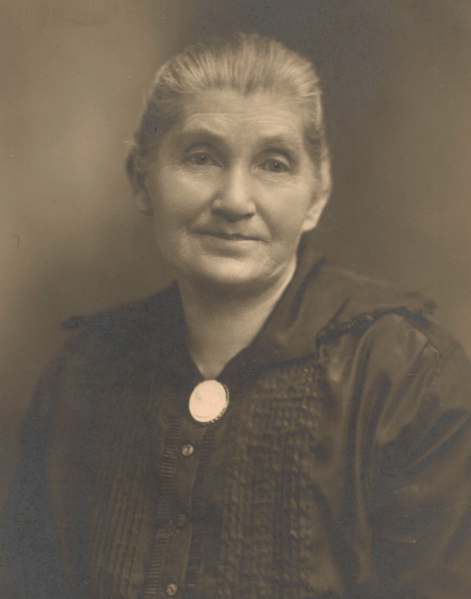 Anne Marie gasped as her knees buckled. She sat down immediately on the rough porch covering her mouth with one clinched hand, holding her chest with the other. She widened her beautiful gray eyes to prevent tears from falling, which eventually spilled to the ground. She had married in Denmark, leaving her “quaint Danish home…dirt floor and thatched roof,” and set sail with her new born child promising to work hard and send money so her husband could join them in America. Her mother and brother had immigrated earlier and by their toil had saved and sent enough for Anne Marie to come. “She crossed the North Sea,” where she and the child suffered terrible sea sickness. Now in Richfield, Utah, “she scrubbed floors and cleaned to…take care of her little son. When she had saved enough…, she sent it to her husband…so he could join them…” But that was not to be. ‘Tell me again what he said,’ she asked. “During the voyage [to New York,] he heard so many derogatory things about the Mormons, and about the Indians killing people in the west, and he got frightened. When he arrived…he turned around and went back to Denmark.” More tears fell from her eyes. She never heard from her husband again. A few years later her child died of typhoid fever. Even so, she retained here kindness and faithfulness as a member of the church. She married again, had seven children and cared for several more. Her youngest child, Harvey, later said, “My mother was a wonderful person…she just couldn’t see anything bad about anyone…my parents never had anything…they gave it all away…we had a happy home…she just loved everybody and everybody loved her…”
 AncestorClips