

“The World War I armistice between the United States Allies and Germany was signed November 11. Bells rang, whistles blew all day long. I was old enough now to go to dances, date, and wait for the boys to ‘come marching home.’ We would go to Logan to the train station and meet the boys as the trains came puffing in. Oh, what a wonderful sound! We knew the boys (maybe) would be getting off. Some, yes.., some no. Many injured, many with a limit of even blindness, but our boys were all welcomed and loved. Bands played, flags were flown, and tears were shed, arms flown around loved ones, dinner parties and dances.
“My sister Fern’s boyfriend came home. A wedding was planned and the happy couple was married at home by our Bishop. She was in a lovely dress and he was in his uniform. A terrible blizzard came up. Guests had to stay all night. Roads were filled with deep snow. We had to hang quilts up to the doors. The wind and snow were so bad, doors had to be braced and blocked. We all started to play games and sing songs, and had a lot of fun. It was at the wedding that I met a prince of a guy. He was really handsome in his uniform. Mother fixed more food, and by lamplight and the warmth of the stove, we all survived. The next morning, father and the men got the shovels and started digging us out. One by one, the buggies and horses with their passengers got down to the main road. Oh, what a wedding night for that dear sister of ours. A big snowball fight took place and everyone had so much fun before they started seeing how far their voices would echo back the goodbyes.
“Two days later, I was called to the phone of our bishop, someone calling me from Mendon. The handsome young man in uniform was calling to invite me to be his guest and partner at the welcome home party for the boys of Mendon. Oh, was I excited, elated and scared. What would I wear? The bishop and his wife all teased me and kissed me, I went back home and told mother and father. Mother went right to work and it wasn’t long until she had made me a lovely dress. It was a pretty blue, not light, but dark blue. The top was velvet, the skirt, a wool material. I was really proud. I caught the Bamburger street car and went to Mendon to my sister’s, and he called for me there. Oh, what a lovely evening. Long tables were all decorated in flags, etc., and the food, fit for the kings. An orchestra played and we danced, danced, danced, all night. I was really treated like a queen. We had one and a half blocks to walk to my sister’s house, snow on the ground, but my feet were so tired, I just had to take off my shoes and finish the walk in stocking feet. He put my shoes in his pocket. It was a night I never forgot. I dated that young fellow, not steady, but quite a lot. We went to dances in Hyrum, Mendon, Logan and Smithfield. He had a nice buggy and a frisky horse for good weather. Once in a while, we went with a group in a sleigh with two horses if there was snow. “
By Ella Mae Walker, Extracted from “The Story of Ella Mae Walker and Walter Tennyas Griffin,” compiled by Dorothy Hardman, 1993. ;#AncestorClips
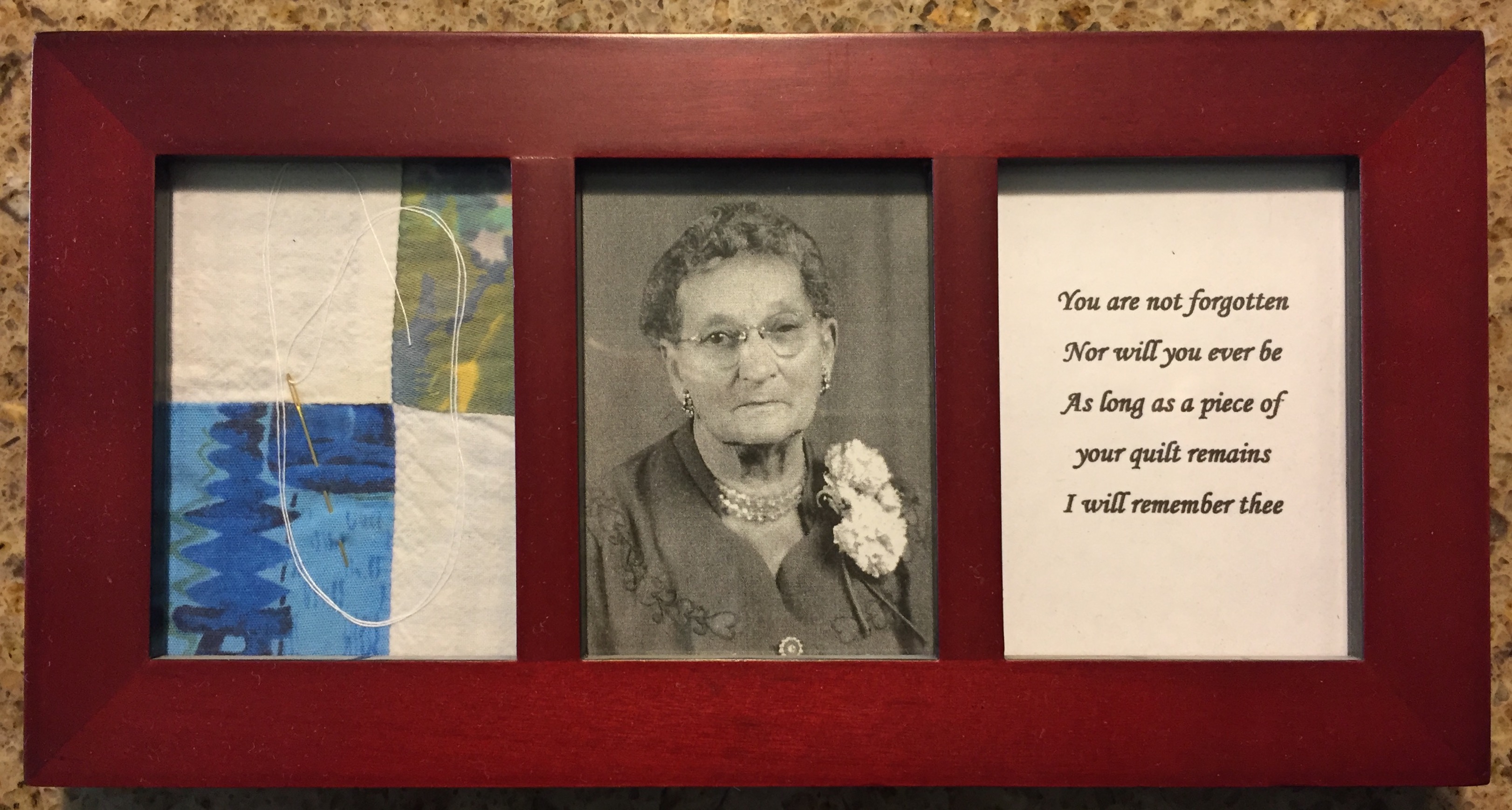 “Lillie’s life was not an easy one, but she knew how to find joy in work, in her family, friends, in service to others and many other little things. She loved the beauty around her and worked to keep her garden and flowers a delight to all who came to call. She created beauty with her hands, sewing many quilts as gifts and as a means of support for herself. One year, 1948 she quilted 26 quilts, made three more tops, braided and hooked 10 rungs and tatted four hankies. In July 1956 she got prizes on two of the three hooked rugs at the county fair. Her hands were never idle, and she gave of herself diligently to make life happier for those around her. [She] worked hard through her widowed years to sustain herself. She cared for mothers and their new babies, spending ten long nights and days for $25.00; the size of the family was no problem for her… While spending the last of her mortal life at Edna’s and Elmer’s just three nights before she died, as they knelt to have their family prayer, she said, ‘Let me pray tonight.’ And mind you she was very sick at this time. She said, ‘Dear Father, I am ready to die, and I want you to send my husband to get me…’ ”
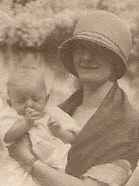 “I was 22 years… old when my first babe was placed in my arms… We arrived at the hospital just before 6 PM… The night was long and the pains were hard. My husband… was kind and attentive. ‘When, oh when would my baby come?’ I was a little frightened. I…pulled [at my husband] when those pains struck me. I had been with my mother when her last two babies were born and… realized a very small percentage of what took place at childbirth. Finally, as the wee hours… crept in, I was taken to the delivery room; nurses and doctors all in white. I was so tired and the pains more severe… I was to breathe deeply the stuff they put into the mask… I remember the roaring noise as I swiftly went down a flume that was taking me on and on, so quickly and so far away. The next thing I knew, I was… in a nice clean bed, a nurse nearby, my husband sitting near me. It was almost 7:30 AM of May 17, 1924. ‘Is my baby all right?’ Junior was born at 6:00 AM, a beautiful baby, 6 pounds, 2 oz.… [The nurse] laid that little gift from heaven in my arms, and his tiny little fingers were touched by mine. Oh, what a beautiful baby, and he is all mine. I am a mother, and my husband is the father. [Soon] we went to town and bought a Pullman baby carriage, the nicest one in Ogden city. It was a beauty. I had the most beautiful baby boy, and I was indeed proud of him. I sewed his clothes; thanksgiving was in every stitch. I made him two-piece suits and always a cute bow tie and cap. As he got to walking age, his hair was blond and very curly. Everyone stopped to admire him. He was a good baby.”
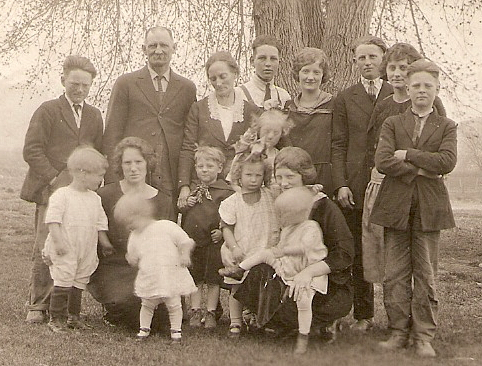 “Lillie and the children were still in bed when Will came rushing into the log home, ‘Fire.’ She grabbed the baby and he carried the little girls out just as the ceiling fell on their bed. There was no water system, so it was soon all gone but a few logs. They made a small room out of these logs, shingled it and moved in before winter.” In time the family grew to 9 children, but it would have been more. Two babies died very young, and one daughter, Birdie, died as a young adult. Each loss was painful. Will worked hard. He was kind and loving, singing with Lillie, playing mouth organs with the boys, whistling while he drove horses, thrashed and sacked wheat. Will was generous when he sold his vegetables, and always had time to wrestle with the boys, and play with the children. “Prayers were always said at the table, everyone on their knees by the chairs that had been turned with their backs toward the table… Lillie… taught the parents class in Sunday School.” She worked hard, loved her family, but had her trials. When baby Blanch died, Lillie wrote, “For a long time, I went around trying to do my work and care for the family, but my heart was broken. With the help of the Lord, I overcame it all, and one morning, as I went to the creek to get a pail of water, the gloom seemed lifted and everything seemed to put on a new life. Those beautiful mountains on the west seemed to be so near and the blue sky overhead. I said to myself, ‘You foolish woman, Look up and thank God for all this beauty that you have been so blind to all these days…’ From then on, things seemed to be more to live for.” Lillie outlived her husband by 40 years. Her son said that her beauty was the kind “that emanates from heart to heart and affects the fiber of each and everyone…”
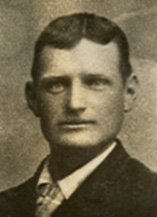 The two-year-old twins, Ellen and William, were excited when the baby came. Olive, was her name. But, 10 days’ later joy was robbed by tears as their mother passed away. William Walker was one of those twins. He was born in the spring of 1870 in Millcreek, Utah to James Craig and Elizabeth Griffiths Walker. Sorely missing their mother, this was a difficult time for the Walkers. The twins were taken in by their mother’s family. Eventually, Will went to live with his older sister, Mary Ann, and he worked in sheep camps as a tender or herder. Raising sheep was a year-round job, shearing in the spring, moving flocks to the mountains in the summer, then to market in the fall. He worked hard and earned a share in a sheep herd. While herding sheep, he no doubt heard of marvels near and far like the typewriter, the telephone, and the transcontinental railroad. It was in fact that railroad that brought the lovely Lillie Clark from far away England. They danced, they courted and they married. William sold his sheep herding share for a ‘wedding stake’ of $200. His first real home was a two-room log hut in the cottonwoods in Salt Lake, with bare floors, a wooden bed with a straw tick, two wool quilts made from his sheep and a companion he loved very much. (To be continued)
  During World War 1, and the Influenza Epidemic of 1918, sixteen-year-old Ella Mae Walker lay sick in bed for a week. “People died like ants,” she said. Everyone wore masks. “No one seemed to be exempt from the terrible disease.” No one visited. Lot’s of boys were dying abroad, animals were dying from the cold, and people were dying from the disease. Finding strength in prayer, Ella Mae recovered and with her hard working family remained grateful, and went about making soups, bread, and puddings. “Father and I would go in our wagon and take it to the homes.” Ella Mae was allowed to attend the funeral of a childhood friend. It wasn’t always that way; recalling her happy childhood, “The boys all played marbles, and we girls like to run and kick them out of their rings, and were often caught and had our braids pulled good and hard.” During setbacks, “The Lord has always helped me find many little things that just had to be found. I have knelt down by sage brushes or big tumbleweeds many times to ask him for help.” After the war and epidemic, those who remained, like Ella Mae went on, cheerfully, in honor of those who didn’t. Now, almost 100 years later, when I think of the bread pudding my grandma made for me as a child, I remember the goodness of her life, the “little things, the things that just have to be found,” and want to be like her. (by Ken Hardman, Ref. HARDMAN BIOGRAPHIES, Ancestors of Sidney Glenn Hardman and Dorothy Mae Griffin, Dec. 2009) #AncestorClips
 AncestorClips