
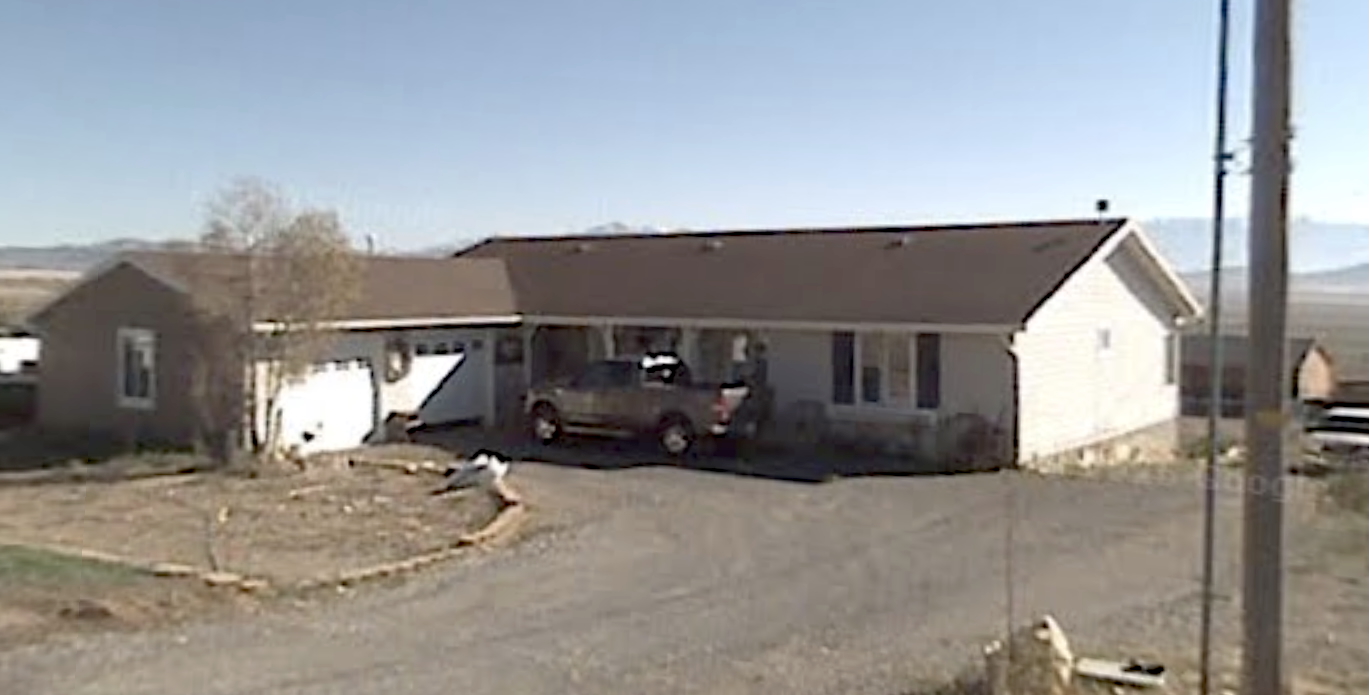
(Cedar Fort Home a number of years later)
At age nineteen, Sidney Glenn Hardman left Cedar Fort, the remote Utah town of his youth. He found work, and his eternal companion, Dorothy Mae Griffin. Forty years later after many good years of marriage, six children, eighteen grandchildren, several startup companies and numerous trials and blessings, Glenn and Dorothy had moved back. Dorothy wrote, “Why were we directed to live in Cedar Fort? What is the Lord’s purpose for us here?” Years before during the many visits they had made while raising their children Dorothy recalled saying, “I would never live in Cedar Fort.” They were concerned by the influence on their children of “an element of [church] inactivity” and lower standards.
Later, with the children now on their own, Glenn’s most recent company closed its doors. They felt the burden of a lingering mortgage, as well as the load of caring for both of their aging widowed fathers and felt “grateful that each one of ‘them’ had their home paid for.” Without an income they were scared, but “felt at ease, almost in a patience mode, and we talked and pondered…wondering about the calmness we felt.” One day Dorothy asked herself what she really wanted. “All of a sudden, the light went on, and I [knew that my desire was to] have a home that was paid for as we entered our ‘later years’.” Further pondering brought Cedar Fort to mind as an option. “No, it didn’t even shock me, and I thought, why not?”
Glenn was surprised but didn’t hesitate. “It seemed so right.” Being people of action, the wheels turned quickly. They found a lot with a foundation and partial house and purchased it, sold their home in Orem, moved into a trailer on the lot on Labor Day, began construction, “and the future was coming into view.” They were in by Christmas.
“We had determined,” Dorothy recorded, “that we would not come to Cedar Fort to try to tell the good people here what to do. Rather, we would quietly wait and serve when called, and we would make friends and help wherever needed… Glenn had come ‘home’ and his old friends and family welcomed us. We…decided to look for the good, to be positive…”
In addition to church callings and community service, Dorothy continue to care for her aging father which required the cost of regular trips to Ogden, money that they didn’t have. “I wondered how we managed to come up with that much…” She learned from her diseased mother to pray “for the little things.” Dorothy learned to love and appreciate her difficult aging father through the care she provided. Glenn also received callings and served in the community including as Mayor, while once again re-building a little company in a barn. This provided jobs for family and friends. When called by the bishop to be the Young Men’s President, he said, “At my age? I don’t have the patience any more…” After Dorothy was prompted to review his patriarchal blessing, Glenn went to work as as he had many times before directed by the Lord. His blessing read, “Take an interest in the leadership of young people…through your fine spirit and enthusiasm, you will be a great power in bringing them to live lives of righteousness…” And so, God’s purpose in prompting them back to Cedar Fort became more clear, to have a home that was paid for, and to serve and improve the lives they were concerned about many years before.
(#AncestorClips – Written by Kenneth R. Hardman. Reference: Sidney Glenn Hardman & Dorothy Mae Griffin, Their Story and Their Life, Volume IV, 1985-2007, edited by Kenneth R. Hardman 2024, pg. 46-50)
 “Mother gave an Indian a whack with an iron poker for stealing her biscuits hot from the oven, and a papoose a whipping for shooting her ducks with a bow and arrow. The mother of the papoose went mumbling around their camp saying that Mother had wronged her papoose. So Mother went to Washakie, the Chief, and Washakie gave the squaw and papoose ‘heck’…
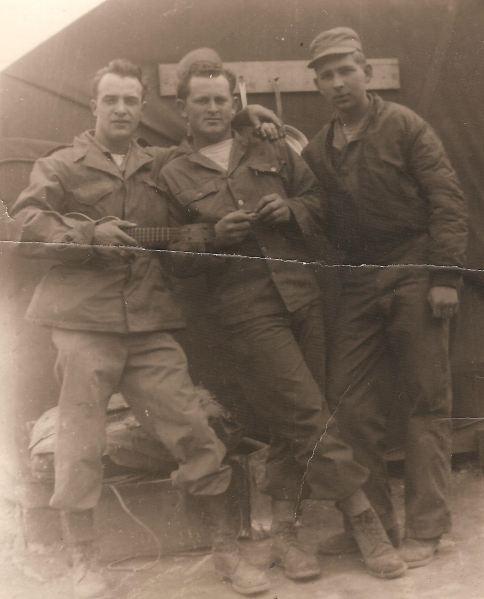 Glenn performed his military duties and was absolutely determined to be an example and a Christian. He never served as a formal missionary for The Church of Jesus Christ of Latter-day Saints, but he took every opportunity to act like one. “There is a fellow in the company that is a member of the church, but not very active. He has promised me that he will go to church, but as yet, he hasn’t. He got quite drunk and started to lose his money, so what does old dad do? I stepped in. He was gambling, so I took his money and his wallet away from him, and… finally got him in bed, but he wouldn’t stay there, so we took him down and put him in the ice-cold shower. Believe me, that really straightened him out in a hurry. I hate to get mixed up with anything like that, but we do have to take care of our brothers, don’t we?” While in the service, he held a number of things close to his heart including letters from home, church magazines, a portrait of Dorothy, and a little photo of his parents and sister. To his wife back home he spoke of blessings on Earth and in Heaven, “If we only live our religion as we have been taught, we shall have these things and also reach eternal life…It will really be a wonderful day when we can both stand together and thank our Father in Heaven for all His blessings.” This is who they were and who they are. This is who I want to be.
 Glenn Hardman and Dorothy Griffin; did they become good independent of outside factors? Certainly, not. Did any of this goodness come from their parents and ancestry? Certainly, yes. Dorothy spoke of her childhood. “I am truly grateful that my parents were always active and that they taught us by their example that church was the place we were to go, that activity in the church would bring joy and satisfaction to our lives. Though I have no memory of a burning testimony in those days, I know the seeds were planted then for my love of the church as I have grown older.” Similarly, Dorothy wrote of Glenn, “He went to Primary and learned about courage and being pure in heart, to be a cheerful helper to his father and mother every day, to say thank you, to obey, to be courteous at home, school and Primary, to pray and to appreciate the beautiful world.” As Glenn and Dorothy continued to grow in their youth, they made choices that brought them in contact with additional sources of help and divine instruction. While a young adult, Dorothy received an assignment she thought miraculous that gave her opportunity to serve in new ways, making her realize the source of her talents, and how she could use them for much good. “I began to see,” she wrote, “what the patriarch had meant when he told me I had talents that would manifest themselves in the positions of responsibility which I would have…” Glenn demonstrated his integrity when on his own in California, surrounded by a world of opportunities for good and bad. In a letter to his parents back home, some trusted friends wrote, “He never misses a day without coming in and reporting in. He is only going with church boys and girls and taking in the church activities. Dorothy Griffin, the girl he takes most, is a swell Mormon girl.” I can see how my life was and is influenced by their lives… I can see their influence in my life, in the lives of all their children, and their grandchildren and their great-grandchildren.
 As the smoke of the industrial revolution continuously settled on residents of Manchester England, in 1834, death persistently came to rest on the small home of Margaret and Richard Hardman. Likely with broken heart wondering if she would ever have children, she laid her fifth lifeless baby to rest in an early tiny grave. Margaret was a weaver, Richard was a rope-maker, but another 9 hopeful months passed with no daughters for mom to dress, and no sons to enter dad’s trade. With prayer, work, endurance, and love, another 10 years passed and 6 more pregnancies. Three would die, but three lived on; Alice Eliza, Lehi Nephi, and George Richard. Alice received the middle name of her grandmother, Elizabeth; George bore the middle name of his father, Richard; and Lehi Nephi carried the names given him by a prophet a year before he was born. Poor health restored under Priesthood hands by the Gospel of the Restoration, Margaret and Richard carried on, gathered with the Latter-day Saints, moved from their home with many of their family, ever onward, following the prophets from Manchester to Nauvoo. Living only blocks from the Nauvoo temple, they built Nauvoo, the Temple, and their posterity. After their eternal marriage and sealing in the Temple of God, Margaret lost Richard, missing on the Mississippi while working and escorting family members to Zion. Widowed, cast out through trails of sorrow, Illinois, Missouri, Iowa, Nebraska, and the loss of her second husband William Presley to cholera, she pressed onward, eventually to a place where her children including Jane Amanda Presley met their companions, raised righteous families, and gave Margaret posterity beyond all that she could have imagined. We too, can press onward, ever onward. #AncestorClips
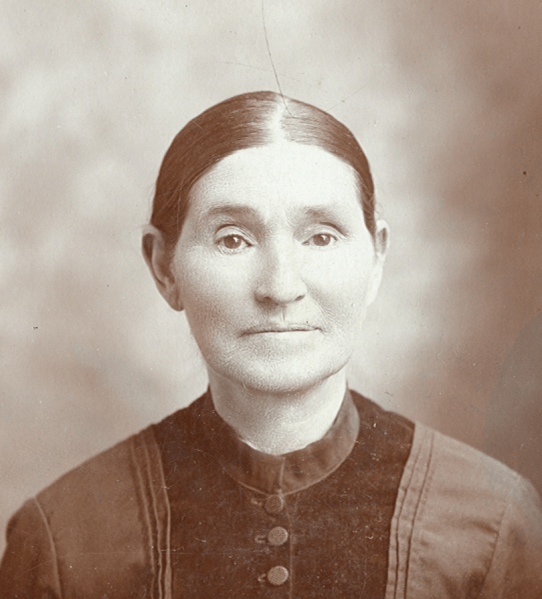 In 1848, five-year-old Francis Ann Coon and her siblings tried to cross the Garner pasture, but the bull saw them and charged. They ran for safety. Her sister “Permilia…climbed [a] tree and…[her brother] John handed all the younger children up before he climbed up himself” narrowly escaping the animals wrath.1 The Coon family, in route from Nauvoo to Council Bluffs was selected to go with the first pioneers to the Salt Lake Valley, but then Brigham Young assigned father Abraham Coon to remain a few years in Pottawattamie “to run a mill and help provide for the Saints…”2 The “corn was scarce,” but the “bluffs, glens, and running streams” were “picturesque.”3 Francis observed her father, Bishop Coon,4 a former member of the Nauvoo Legion and guard to Joseph Smith, faithfully help operate the Indian Mill on Big Mosquito Creek and care for families whose men had gone to serve in the Mormon Battalion2 including William Garner, the likely owner of the bull.3 At this young age, Francis experienced the faith of her parents, their determination to be endowed in the temple before leaving Nauvoo,2 and their sealing in Winter Quarters.5 After fulfilling their assignment in Iowa, Francis and her family walked1 most of the way to Salt Lake to carry out their hopes and dreams in Zion. It was in Salt Lake where Francis would meet her future husband.
 Some major customers didn’t pay; and Glenn’s cabinet business began to fail. Dorothy was very concerned about family bills and groceries. In the 1960’s they built their second dream home, welcomed their sixth child, and served anxiously in church assignments while building a growing company. Not able to focus on her church leadership position, she thought to ask for a release, and find a job. Glenn said, “No.” But her thoughts persisted. She had served well; surely God would not expect more. She couldn’t sleep, she prayed, she cried, and prayed more. She decided to ask for the release the next day. Thinking this choice would relieve her pain, she tried to sleep. “Not so! I turned and tossed and wept some more,” she said. In desperation she asked God, “Isn’t it the right decision?” Immediately, a flickering light in her mind became bright and she distinctly knew her decision was not the Lord’s will. “I did not understand why,” she said, “but I told him I would continue to serve as long as He had need of me…” She then felt peace. She new they would be blessed. Years later she looked back and realized that God new what was coming; what the family needed, and who needed her at that time. Dorothy’s specific fourth year of service was the exact time period needed for God to work miracles through her in the lives of at least two other people. Dorothy’s oldest daughter became deathly ill. The failure of the family business had resulted in a new job for Glenn, and relocation a year later that put the family in proximity to doctors who could diagnose and treat her rare disease.
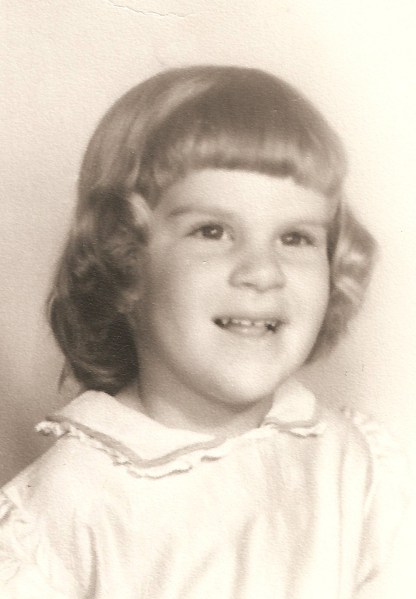 Cheryl Diane Hardman was born in January, 1951. As a brand new baby, she received a blessing by the hand of her father while he was on military training leave, then she didn’t see him again for 16 months while he served overseas for his country. She grew up a bright child. At the age of 3, Knowing that her baby brother loved bananas, Cheryl turned again to the hand of her carpenter dad and said in all seriousness, “Daddy, would you bring home some wood to make a banana tree?” As she grew, Cheryl did what most children did; she rode bikes, got cuts, had stitches, took music lessons, entered science projects and won awards. When older with 5 younger siblings, Cheryl politely told her parents that 6A students, especially the girls, “do not ride their bikes to school anymore. They are too old for that.” As a teen, Cheryl didn’t need to be reminded of homework. She enjoyed classes like typing, seminary, history, English, Spanish, science, and algebra. She even made some of her own clothes. Her favorite TV shows were, The Mouse-ka-teers, and Bonanza. With high hopes, her parents looked forward to great things in life for her. In 1969, fulfilling her college dream, Cheryl slowly developed debilitating symptoms from a disease whose diagnosis evaded doctors until Cheryl could not walk or talk; death was at the door. That year, as mankind overcame great odds and put a man on the moon, Cheryl desperately struggled and with the help of prayers, family, and many doctors, overcame the disease. She finished college, became a teacher, served others with handicaps, married, and raised a great family, thereby touching mankind for good. Thanks Cheryl, you are a great sister.
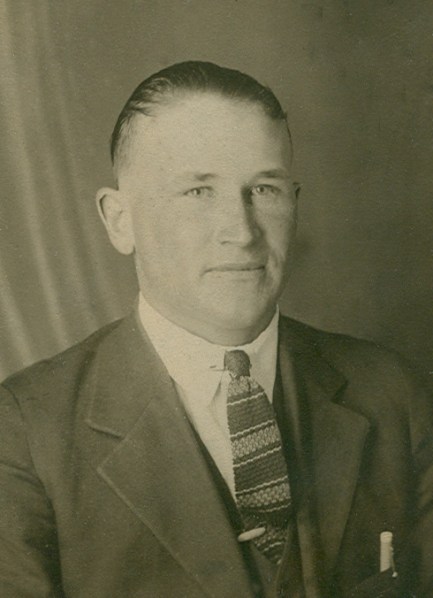 Typical for men in the depression years, Sid worked at whatever he could to keep bread on the table and a roof over the heads of his growing family. He was a “Jack of all trades,” adept at “making do,” mending with bailing wire, keeping things running. Myrtle and Sidney, served in the community and church and enjoyed the growing up years of their children being “mom and dad” to many, supporting them in their activities, inviting them to their home. This continued with grandchildren. They were protective of their children, who never heard “their dad tell a sexy or off-color joke.” He enjoyed a good clean time and liked to see others having a good time too. He pulled bobsled with his team of horses turning that sled round and round, flipping those kids out in the snow. Sid took his family role to heart; he taught, he loved, he scolded, he played, he supported. He and his sweetheart were always on hand for everything; baseball, wrestling, football, softball, proud of the accomplishments of family members. “Sid’s shop was a place of learning and the boys enjoyed working with him. Grandpa was always fussy about keeping his tools in the right place and taking care of things. So it was with his animals: he followed his dad’s training and always took care of the horses, unharnessed them, brushed them down and fed them before he had his own meal.” He was honorable and endured cheerfully throughout his life, a great example to his posterity. (Adapted by Kenneth R. Hardman from Sidney Lehi Hardman & Myrtle Emily Elton: Their Life, Their Love and Their Family, 1900-1991 compiled by Dorothy Hardman. Photo from family files)
  AncestorClips