
 On September 11, 1777, General Washington collided with the British here at Brandywine Creek, Pennsylvania; booming cannons echoed 25 miles east to Philadelphia. There were heavy American losses on the battlefield. John Coon Jr. was serving his apprenticeship nearby and heard the blasts, a penetrating sound for a 9 year old. ([1] Goble, pg. 120, ref 12). The very next spring, the British launched “a secret night assault [10 miles] to the north in Paoli.” Not yet aware of the attack, “John Coon roused himself from…his thick…German-feather comforter. He rubbed the sleep from his eyes and stretched to greet the dawn. Clad simply in a long nightshirt, he stepped…into his britches…, pausing only to splash water on his face and straighten his thick [untidy] hair… His thoughts were on his chores, [and] the few moments he could spend in his forested hideaway at Brandywine Creek catching fish for breakfast, and [then] his afternoon at the cooper shop…” (Goble, pg. 123) But, instead of a pleasant spring morning, the penetrating sounds of death again rolled like thick fog across the Great Valley. Word spread that 150 Colonials were found dead. As the wounded “were transported…along the road through Chester,” the neighborhood wept at the groans of the dying. As a young man John experienced these realities but continued industrious and of service to family and country in Pennsylvania, Virginia, Ohio, and Illinois. At age 16, after the death of his father, he returned home to Lancaster, “rented a barn, and freighted [for the local militia] until he married,” (Goble, pg. 124, 129) at age 30. He was becoming a “tower of strength and manhood” upon whom his present and future family could trust. (see Goble, pg. 130) Thank you, to those who served here, and thank you, to my 4th great-grandfather, John Andreas Coon Jr.
(Written by Kenneth R. Hardman, with quotations from reference [1])
References
[1] Goble, William Kent, and Ord, Gayle Goble, Heritage of the Abraham Coon Family, 1989, pg. 120-130
Author Notes: Special thanks to the authors of reference [1] for their significant research into the times and places of this ancestor. From John A. Coon Jr. I learn that life is not always easy but I can learn from the challenging times and continue to strive to do good things in my life. John served an indentured apprenticeship away from his family for many years, and then lived through the uncertainties of the American Revolutionary War. Later in his youth he took care of his younger siblings. I’m a better person having studied his life.
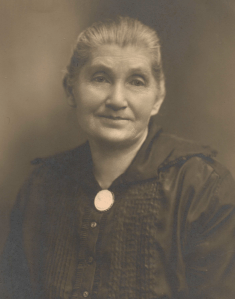 Anne Marie gasped as her knees buckled. She sat down immediately on the rough porch covering her mouth with one clinched hand, holding her chest with the other. She widened her beautiful gray eyes to prevent tears from falling, which eventually spilled to the ground. She had married in Denmark, leaving her “quaint Danish home…dirt floor and thatched roof,” and set sail with her new born child promising to work hard and send money so her husband could join them in America. Her mother and brother had immigrated earlier and by their toil had saved and sent enough for Anne Marie to come. “She crossed the North Sea,” where she and the child suffered terrible sea sickness. Now in Richfield, Utah, “she scrubbed floors and cleaned to…take care of her little son. When she had saved enough…, she sent it to her husband…so he could join them…” But that was not to be. ‘Tell me again what he said,’ she asked. “During the voyage [to New York,] he heard so many derogatory things about the Mormons, and about the Indians killing people in the west, and he got frightened. When he arrived…he turned around and went back to Denmark.” More tears fell from her eyes. She never heard from her husband again. A few years later her child died of typhoid fever. Even so, she retained here kindness and faithfulness as a member of the church. She married again, had seven children and cared for several more. Her youngest child, Harvey, later said, “My mother was a wonderful person…she just couldn’t see anything bad about anyone…my parents never had anything…they gave it all away…we had a happy home…she just loved everybody and everybody loved her…”
 Opportunity was slim in Newton Utah in 1899. Walter and Eliza Caroline journeyed by steam locomotive from Newton to Indian Valley Idaho, anxious for promising, “cheap and plentiful” land further north. A “lawless element…infested the railroad,” so, “mother and the two baby boys rode in a passenger car” while Walter guarded the family’s possessions in a box car. Aroused from the continuous clickety-clack, he heard galloping horses and rough voices outside the train. An instant later, rough fingers wrapped around the end of the box car door. “Get out o’ here,” he yelled. The door opened a few inches with a slow screech. The Griffin “livestock” stirred, “penned-off at one end,” of the car. Their furniture and [belongings] were at the other end, and their heavy “machinery, wagon and food…were…near the doorway.” No stranger to guns and outdoors, he had learned hunting and defense from his frontiersman father. Walter grabbed his Colt .45 from beside his books and lantern. He stood, shoulders back, chin high, and aimed. A “tough” face looked in. Walter pulled back the hammer; the click filled the car. He “tighten[ed] his finger on the trigger.” The intruder “read the message in his eyes,” muttered, then backed out and “dropped off” the train. The family made it safely to Indian Valley, prospered “handsomely” for ten years then returned to Utah due to concern over “raising their family in this relatively untamed country.” Moving from “a prosperous…ranch” in Idaho to a “alkali-infested lake shore [in Utah] brought years of toil and struggle. However, [Walter] tackled it resolutely, often stating that, ‘hard work and perseverance could overcome any obstacle.’” #AncestorClips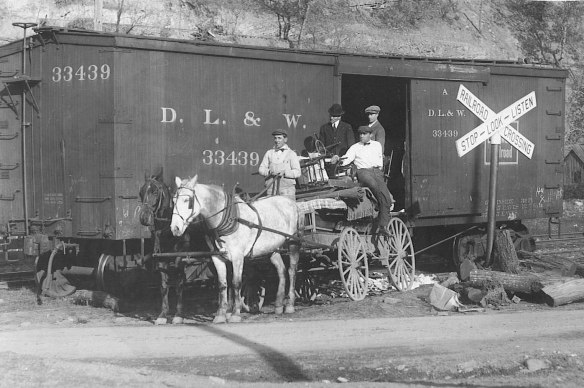
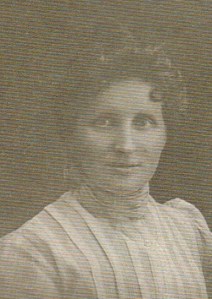 It was Christmas of 1909 just before my dad was to come home [from his two-year mission.] We were down to board floors and paper curtains [having sold the furniture piece by piece.] We had large five-gallon lard cans to sit on; a stove, table, and a bed that we all slept in. We sat in bed and sang Christmas carols until…it was time to go to sleep. We only had a bowl of rice that night for our dinner… We went to sleep hoping…for Santa to come. I woke up to the sound of crying. I went into the other room and found Mama crying. I asked what the matter was. She said…she was so grateful and happy to her Heavenly Father, and told me to go back to bed so Santa could come. I…was wakened again by her sobs. I went to sleep the third time and woke up at 7:30 am with mother still crying. As we all came out of the bedroom she made us kneel in prayer before we could see our toys. I will never forget the prayer my mother offered, thanking the Lord for his goodness to us. We then went out on the porch; there was a doll and dishes for the girls, a tool box for the boys and a small decorated Christmas Tree and a basket of food… We danced around the tree and sang and went to bed that night with our hearts full of happiness and our stomachs full of good food. Brother Alma Winn was our Santa and he had eight children of his own… My mother had cried and prayed all that night. Her prayers were answered… How grateful I am for the faith of my mother and grateful…that we five little ones weren’t forgotten by a “Santa” who had been inspired to come and help us in time of need.
 With all hopes of emigration from Norway to Zion, Ole’s father died leaving a widow and nine children. Fighting despair with faith, the whole family was gathered in the Rocky Mountains within six years. During his youth in Utah, Ole worked as a laborer, miner, hotel mechanic, then railroad foreman. In 1899, he married Halvorine Halvorsen, also of Norway. Nine years later, on a Saturday night, a knock came at their home. Ole excused himself from the dinner table, then returned and invited Halvorine to join the conversation with the Bishop. “All children listened at the door.” Ole had received a call to serve a mission in Norway. “After some discussion, Halvorine said, ‘Ole, accept this calling. I am sure the Lord will provide. If it hadn’t been for the missionaries, we wouldn’t be here today…’ Ole quit his job [and] mortgaged the home,” but funds were scarce. How could he go, an associate asked? Ole said, “The call has come to me… God will open up ways…” Ole fulfilled his mission, returned as a fine leader. In numerous church positions he enjoyed a “rich portion of the Holy Spirit of God.” He and his counselors “awakened and brought into activity many of the men who had become inactive.” As a mechanic, he could “fix anything.” Ole became Temple foreman, and chief engineer for church buildings in Salt Lake City. The Presiding Bishopric of the church said, “Ole was the ‘guardian angel’ of all the Church buildings…” “As you look at the Temple, as you go through the ins and outs of these buildings, you see [Ole’s] fingerprints everywhere…I glory in the steadfastness of this man…”
 “Hannah gave Andrew to understand that her husband had to be worthy to take her to the temple. So he set about preparing himself…” At last the happy day arrived. He borrowed a team and sleigh and they drove from St. John, Idaho to Logan, Utah. Living near their extended family, “they had good land, flowing wells, excellent horses and fat cattle.” On urgings from “a sharp real estate salesman,” the large group sold-out and went to Canada to start a ranch with their “100 head of cattle and 14 sheep camps.” It was the coldest winter on record and, “they lost most of the herd.” In the spring, with much sorrow and homesickness, Andrew and Hannah returned to Idaho to homestead 160 acres at “the head of the Big Malad River.” The high sagebrush indicated good soil but required “long, tiresome work” to clear the land. In the summer, they lived in a log cabin; in the winter they lived in St. John where their five children attended school. In later years, he broke his ankle and also had a stroke but remained cheerful. Hannah learned to drive when he no longer could. When grandchildren, Ferril and Rex, came to visit, Hannah drove them around town to show them off. Before his death, Andrew said, “It is my advice to all young people to read and learn all they can about this wonderful church we have and never turn down an opportunity to labor in this great work that we as Latter-day Saints have accepted.” Andrew died on his 80th birthday. Hannah said, “We had a happy married life. We never had a quarrel… I am thankful I had such a good man and such good children.”
 In 1869, Andrew’s mother died before his 1st birthday. His father, Lars Anderson, with baby Andrew, made the trip from Sweden to Utah in just 30 days, on steamship and railroad. Andrew was left in the care of Lar’s sister, in St. Johns, Idaho, while Lars took work 150 miles south in the Utah Bingham mines. By 8 years of age Andrew was driving oxen and working the cornfields in Idaho. For the next 8 years, Andrew lived with or near his father in Utah who took him to his first store and bought him clothing and a suit. In Utah, Andrew earned meager wages herding sheep and cattle and working in the mines. He attended school for six months and learned to read the Bible. At age 17 he returned to Idaho continuing sheep herding. At age 23, his sick father asked him to come back to Utah. Shortly after Andrews arrival, Lars died of miner’s consumption, and Andrew paid for the burial. Andrew joined the LDS church at age 25 and had $800 from successful sheep herding. He was called to serve a mission, but declined indicating that “those better off should go,” wishing later, “that he had accepted the call.” Instead, he spent the $800 on more sheep, and he took a bank loan for horses and equipment. In a major spring snowstorm, after “the sheep were sheared and had lambs by their sides,” he lost them all in four feet of snow. He honorably reported to the bank, whereupon they took all his assets except for one saddle horse. Broke, and broken hearted, he returned to Idaho, obtained work shearing sheep, started over, and met the girl who would take him to the next level.
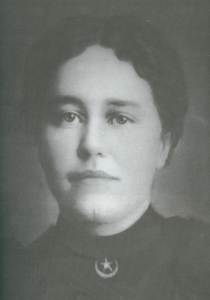 Hannah Elizabeth Josephson, came into the world (St. John, Idaho, to be exact) on November 27, 1877, 2 days before Thanksgiving. She was the 3rd of 12 children born to Lars and Anna Josephson, immigrants from Sweden. There was great love and respect in this large but united family. They were known as “one of the best behaved in the valley.” Hannah was a “pretty brunette,” industrious, and “of a cheerful and religious disposition.” “I used to pray every day and trusted in the Lord,” she said. “I had my prayers answered many times.” The children were taught reading, writing, arithmetic, and geography by their mother, so Hannah was well prepared to enter school at age 6, and continued through the 8th grade. In 1887, nearly all family members including her father had a brush with Typhoid Fever. Three months of dedicated nursing and service by the church and community pulled them through. There were no deaths in the family, but her brother Levi stuttered badly the rest of his life. Hannah was baptized in 1891. She was inspired by her parent’s faith and devotion. “Many times I saw [my father] ride on horseback a distance of 15 miles to attend priesthood meeting. My whole family was religious at heart.” Hannah served as 2nd Counselor in the Young Ladies Mutual Improvement Association at age 18, admired church leaders, and remained active all her days. She too, had many admirers. While courting the man of her choice, “Hannah gave [him] to understand that her husband had to be worthy to take her to the temple.”
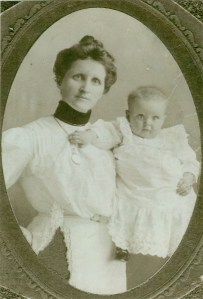 “In the spring of 1908, Dad was called on a mission to Norway. Mother and five children were left home. In the spring of 1909, Edna was stricken with pneumonia, so the doctors thought. It later was diagnosed as spinal meningitis. One cold wintry night, Mrs. Williams, a neighbor, came over to help mother as Edna was so ill. It was almost midnight when Mrs. Williams said, ‘I am afraid she is gone.’ Mother put her head under the mattress and cried ‘No Dear God, no!’ I had been taught about prayer and about the elders of the Church. So I ran a half a block up the street to Bro. George R. Emery with bare feet and snow up to my knees, and asked if he would come and bless my sister. He put his coat over his long night shirt and carried me home. As he put his hands on Edna’s head and started to pray, I stood by and watched her little white face so still. All of a sudden, little red streaks started up from her mouth and then a gasp. She relaxed into a sleep for the first time in weeks. This was my first testimony and answer to prayer and I knew God heard and answered prayers … Edna was always very precious to me from then on. My interests were always for her.”
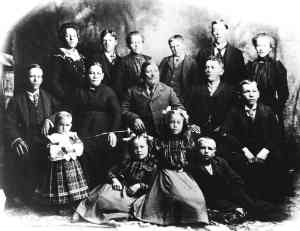 Lars Josephson came by train…to Brigham City. There he worked on the railroad…then drifted northward and took up a 160-acre farm at St. John, Idaho…He got a job in Star and Marsh valleys to pay for a yoke of black oxen…Crossing the Bear River, one of the oxen got stuck in quick sand and they were unable to save him, so he had to work some more…He married Anna Isaacson in 1871 in Salt Lake City in the Endowment House. They…had 12 children: 4 girls and 8 boys. He was quite a religious man and [rode] 15 miles to Portage to Priesthood meetings and went to Malad to conferences…They dug an 80-foot well and drew the water up in buckets. He was a shoemaker…and made all the…harnesses they used–also mended shoes for the neighbors. He helped build 2 reservoirs and had good water rights for his farm. His home, barns and sheds were all made of logs which he hauled…by ox team…He had to haul his crops long distances to Corrine to the railroad…very long cold trips of two and three days and they had to sleep by a campfire in all kinds of weather…They always had plenty of flour, cured meats, honey, fruits, and vegetables and large cheeses. He was generous and shared much with his neighbors…[On] December 2, 1902, their home burned to the ground. They saved a few things and the people turned out and helped build a two-roomed log house in a short time with some logs Charles had there. They lived in a tent until the house was finished…He was of normal temperament and seemed to have a good understanding of the gospel. He had a lot of friends, and his family was well behaved. He loved his horses and drove them on a trot and sang as he went.”
 AncestorClips